
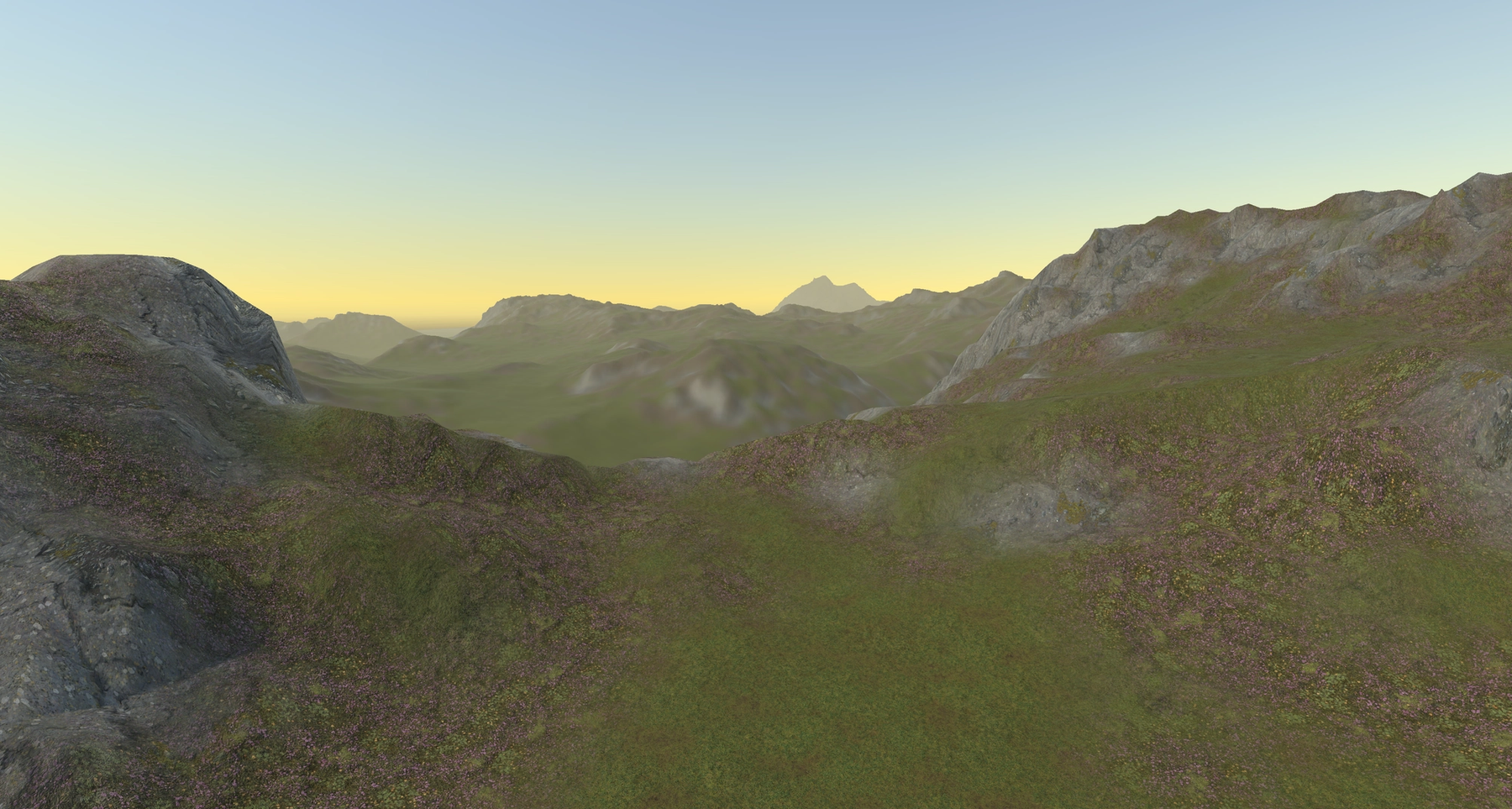
Video game terrain generated by Adam deGrandis '05 using procedural tools.
There’s no question that artificial intelligence is everywhere. From ChatGPT to Nano Banana, these large-scale generative models are reshaping expectations for teaching, learning, creativity, and intelligence as a whole.
What place does artificial intelligence, specifically generative models, have in art and design? How does Maine College of Art & Design emphasize students’ creativity and artistic process in a world that includes generative artificial intelligence? One key way is to help students develop their creative intelligence.
Creative intelligence refers to an individual’s “ability to adapt to changing environments, solve problems in innovative ways, and engage in divergent thinking.” (1) It emphasizes versatility and resilience in the face of challenges that require creative thinking. Studied for decades, creative intelligence is uniquely human.
With the fast pace of the world and the growing presence of generative artificial intelligence, creative intelligence is an increasingly valuable skill. Rhode Island School of Design, for instance, offers a Creativity Workshop in its Continuing Education department that emphasizes hands-on experimentation in a constructive environment. In their words, “Students are challenged to let go of preconceptions and encouraged to experiment, play, and make.”
Creativity, critical thinking, empathy, and resilience are central to our pedagogy at MECA&D. While the range of artistic disciplines at MECA&D requires different approaches to creative intelligence, there is one common denominator: an emphasis on process. While artificial intelligence obscures the generation process in favor of a single, simple final product, MECA&D foregrounds the development of students’ practices. Students’ creative intelligence shines and develops through the challenges of the artistic process.
In addition to developing students’ processes, our instructors emphasize the human elements of the artwork students create. In one department, this might mean analyzing the tactile elements of a piece. In others, students may trace the many overlapping histories of an artistic tradition. Art, regardless of its discipline, requires a human touch.

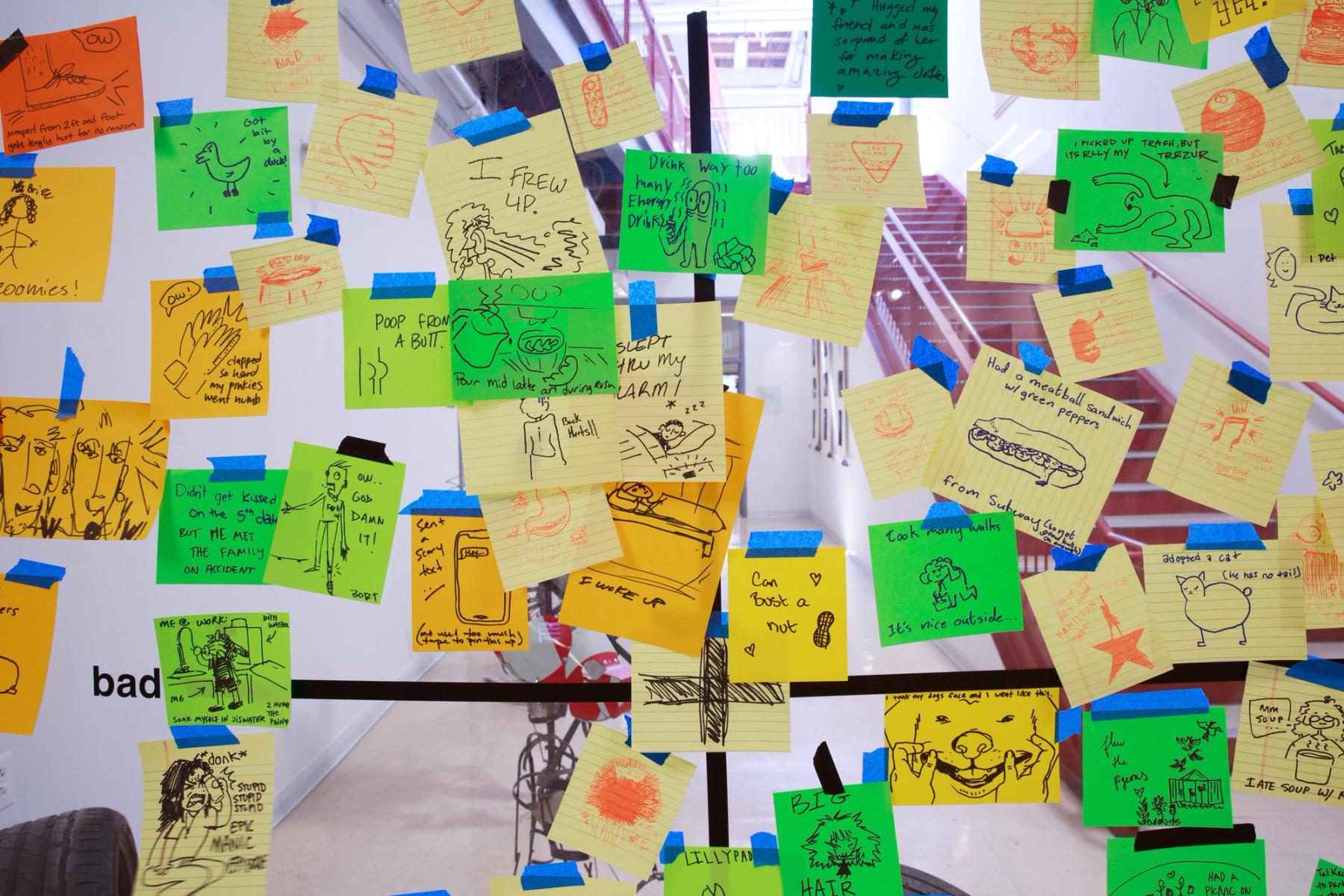
Kate Clark's ’26 thesis exhibition, Authentic Intelligence, reflects on the shortcomings of AI, asking viewers to represent and plot experiences on scales of good to bad and emotional to physical.
Adam deGrandis ’05, Assistant Professor of Animation & Game Art, recognizes that his discipline has long been a site of computer generation. In order to build an open-world game, for instance, a designer needs to use a procedural generation to populate repeated assets, including trees, backgrounds, and textures. By delegating these simple tasks to an algorithm, game designers can focus on tackling other challenges. The struggle of narrative, character creation, and playthrough all require innately human creative intelligence.
Experiences without this human aspect often fall flat, primarily because the models are generative and not creative. For example, deGrandis explains, if you prompt a generative AI model like ChatGPT or Midjourney to create an image of a castle, it will produce an image that is an average of all the many thousands of castles it has been trained on. This image is a “best guess” result based on the prompt, which tends to suppress “outlier” input data (usually those that are more creative or inventive) in favor of a generic result.
“Those outliers are the most creative and most interesting,” says deGrandis. That’s where our students thrive. A walk through the hallways, studios, and classrooms shows these projects proudly on display, addressing a wide range of topics.
No matter the artistic pursuit, the College educates artists for life. It supports students as they tackle the challenges of developing their own artistic voices, helping them to develop the skills to use and think critically about their tools. No matter what tools a student uses in their work, creative intelligence is the most important skill for developing an artistic voice uniquely their own.
Words by Meier Clark. Images by Adam deGrandis ’05 and Natalie Conn, Salt ’07.
Footnote
Arpan Yagnik, Unleashing Creative Thinking, 2025.