
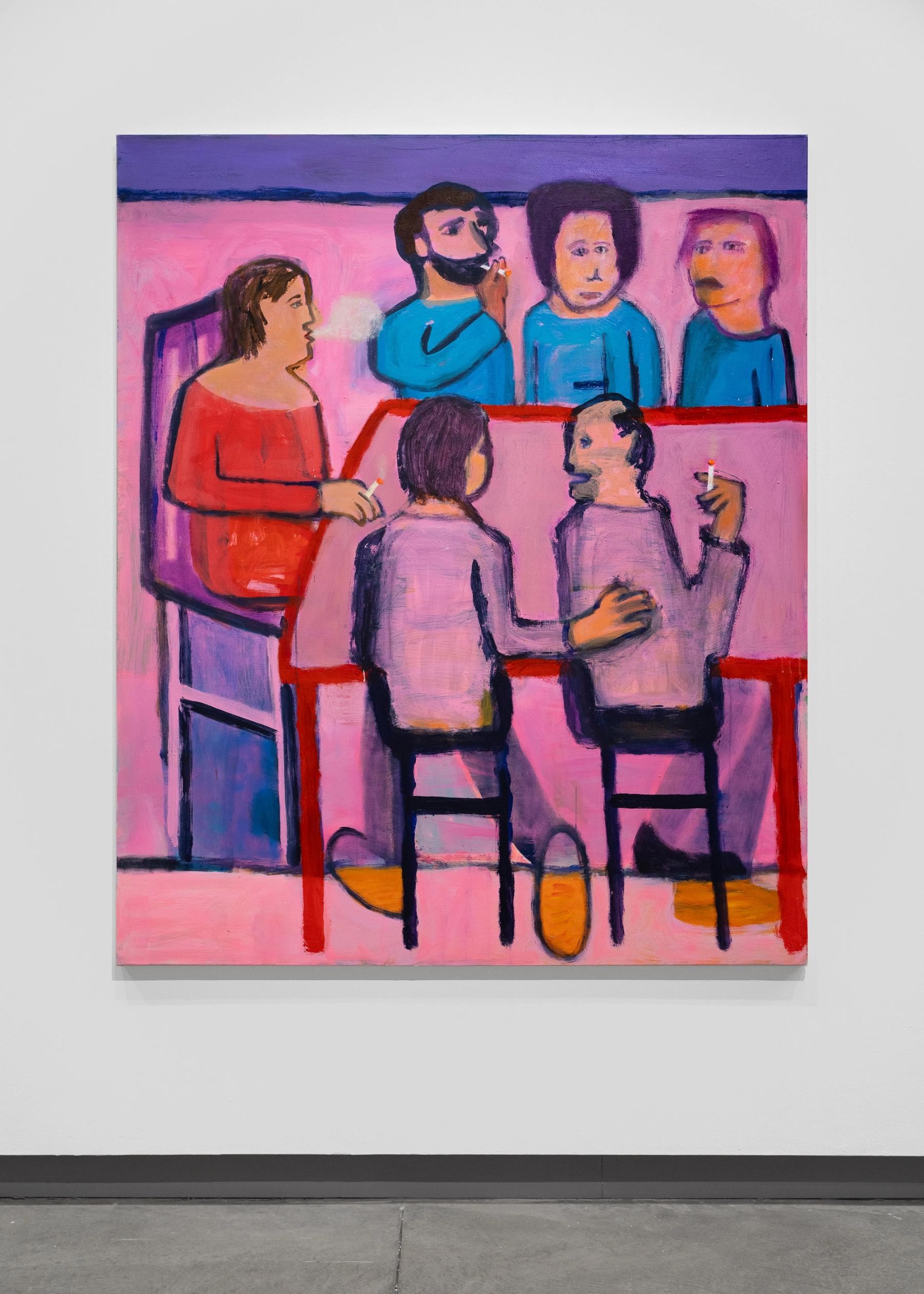
Katherine Bradford, Smokers, 2024. Photo by Joel Tsui ’16, Salt ’17, MFA ’19, image courtesy of the ICA at MECA&D
Cultivating & Sustaining Maine's Art Ecosystem
When thinking of an arts ecosystem, creative metropolises like New York City, Los Angeles, and Berlin often come to mind first. These cities’ reputations as dense cultural engines sustained by abundant populations, resources, and scale stand in sharp contrast to the lure and lore of Maine as a site of escape for artists. Our state is frequently framed as a refuge from the urban grind, where creatives seasonally retreat to focus and make work without distraction. However, cultural producers who build their lives here are not removed from challenging realities or responsibilities. Instead, many rely on ingenuity, reciprocity, and interconnection to make a living and forge networks that enable them to pursue their practices and livelihoods. These connections, continually built and maintained in “Vacationland,” foster a creative ecosystem that is locally rooted, innovatively sustained, and actively engaged within and beyond the state. Maine College of Art & Design plays a central role in this ecosystem, providing a hub for interaction, engagement, development, and exchange that impacts the vision and direction of many Maine artists’ and designers’ careers and possibilities.

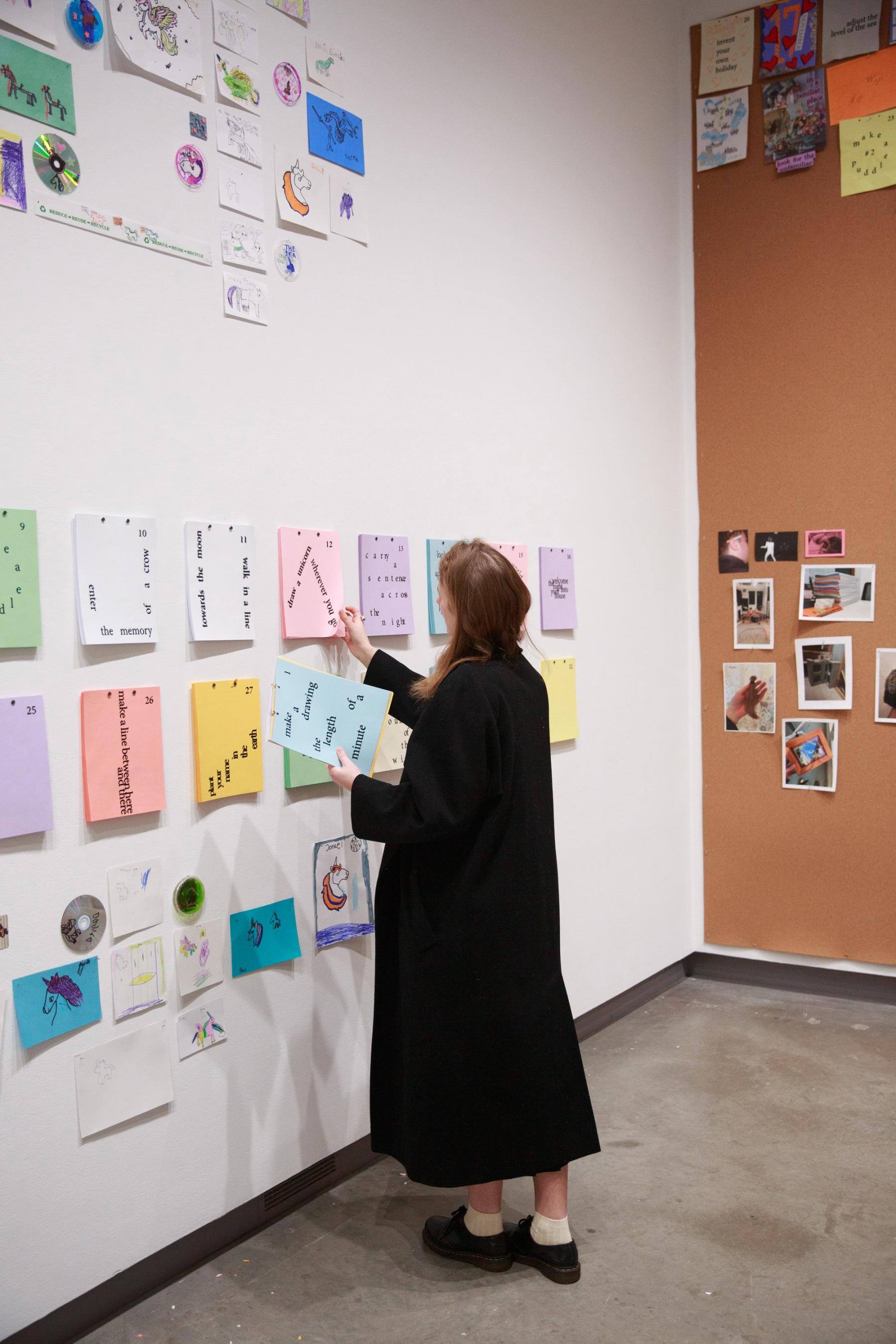
David and Ela Horvitz, Change the Name of the Days, 2026.
Photo by Natalie Conn, Salt ‘07

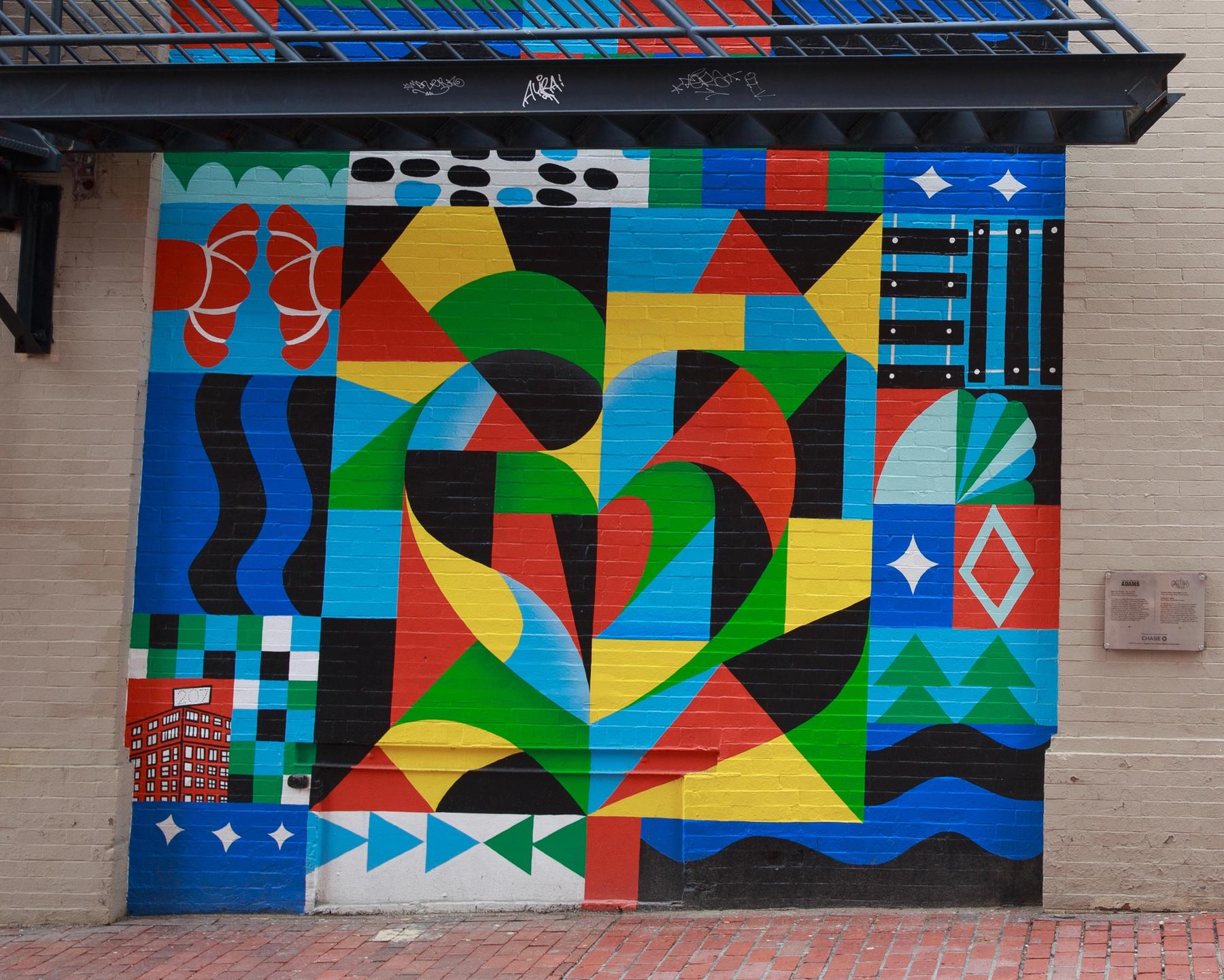
Rachel Gloria Adams and Ryan Adams, Heart of the City - Vol. 4, 2024. Public mural in Portland, Maine. Photo by Natalie Conn, Salt ‘07
To understand Maine’s creative networks and Maine College of Art & Design’s influence on them, it helps to first clarify what an arts ecosystem encompasses. Built from a web of interconnected relationships that allow creative work to be developed, supported, and shared, the overlapping networks of cultural producers and consumers that comprise any arts ecosystem engage in ongoing idea sharing, education, dialogue, production, and critique. Artists, designers, craftspeople, educators, schools, writers, and critics shape creative ideas and discourse, while gallerists and museums—along with art fairs and auction houses in some locales—influence visibility and markets. Studio collectives, community maker spaces, and residencies support production and connection, alongside grants and foundations that provide resources. Together, these elements create the conditions for art to be made and experienced, as well as pathways for visibility and exchange. Collectors and audiences also contribute essential perspectives, supporting creative production and fostering experimentation.
In addition to enhancing the social and cultural conditions in a given area, arts ecosystems are also economic drivers. They support job creation and local talent retention while strengthening related industries and creative economies. In Maine, our cultural industries generate approximately $2.5 billion in economic activity annually, while the creative sector supports nearly 19,000 jobs, with total wages and benefits exceeding $1 billion annually (National Endowment for the Arts, "Maine State Profile", 2023).

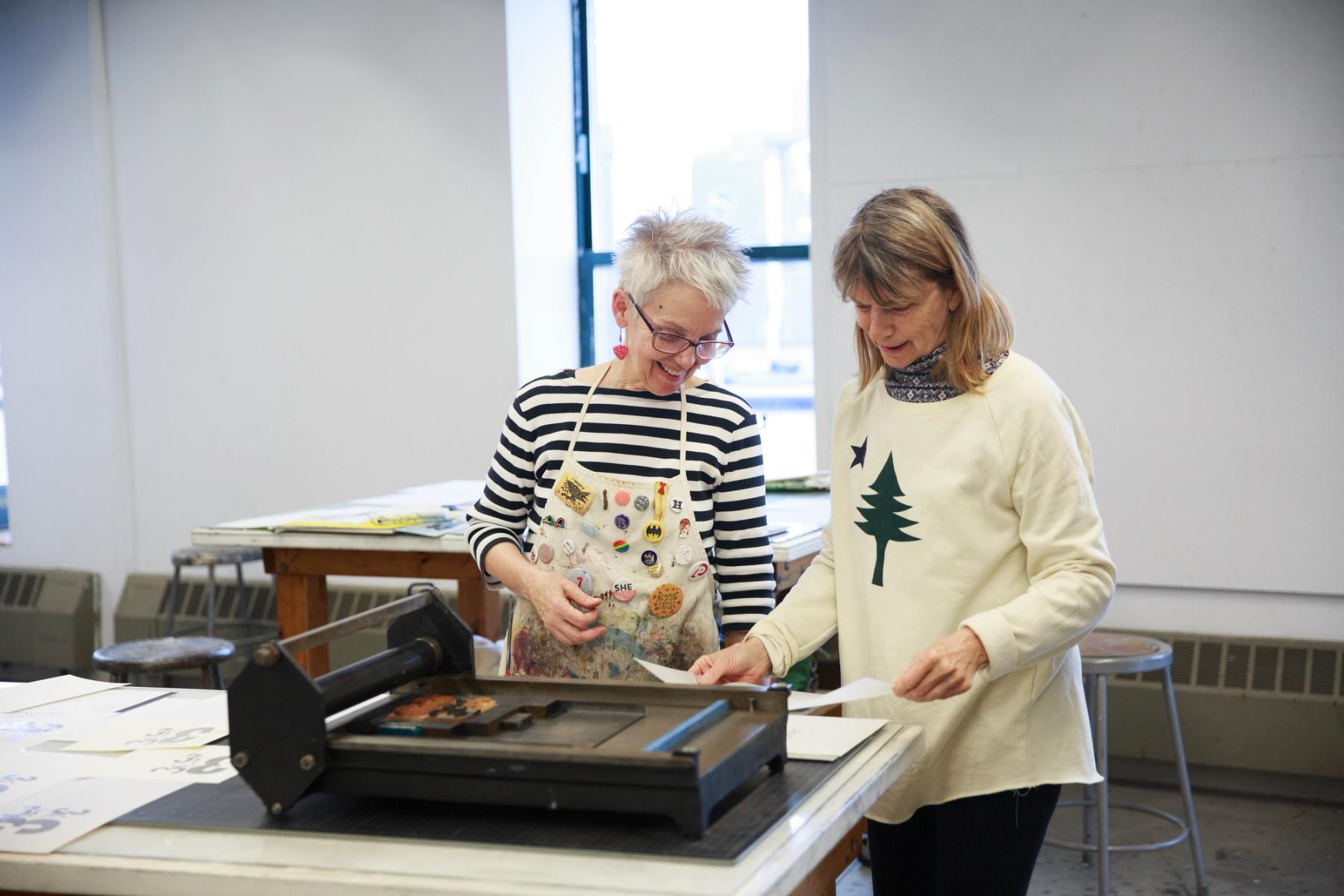
Crystal Cawley teaching Continuing Studies Course, Print for Pattern. Photo by Natalie Conn Salt ‘07
By educating artists, fostering mentorship, and linking graduates to professional opportunities, Maine College of Art & Design supports the state’s creative economy and strengthens the social networks that help the state’s arts ecosystem flourish. Beyond the classes and courses of study offered for more than 400 undergraduate students, 100 graduate students, and over 1,000 Continuing Studies students, the College employs 115 faculty members, who share their expertise and shape the social and cultural fabric of the state’s wider creative community. Operating within a pedagogical model attuned to the needs of today’s art and design students, faculty strike a considered balance between supportive and interrogative critique while providing a curricular framework that prepares students to thrive as professionals. Students learn not only how to make work but also how to navigate the unconventional career paths of artists and designers, which often rely on building strong interpersonal networks and sustained social and professional bonds.
MECA&D also operates as an importer of creative talent. While more than 70% of students at the College arrive from outside Maine, over 50% of graduates choose to stay in the state after graduating. They become the designers, teachers, writers, makers, entrepreneurs, gallerists, studio owners, collectors, and champions of one another’s work, who, in many ways, are shaping the foundation of Maine’s arts ecosystem and creative economy.

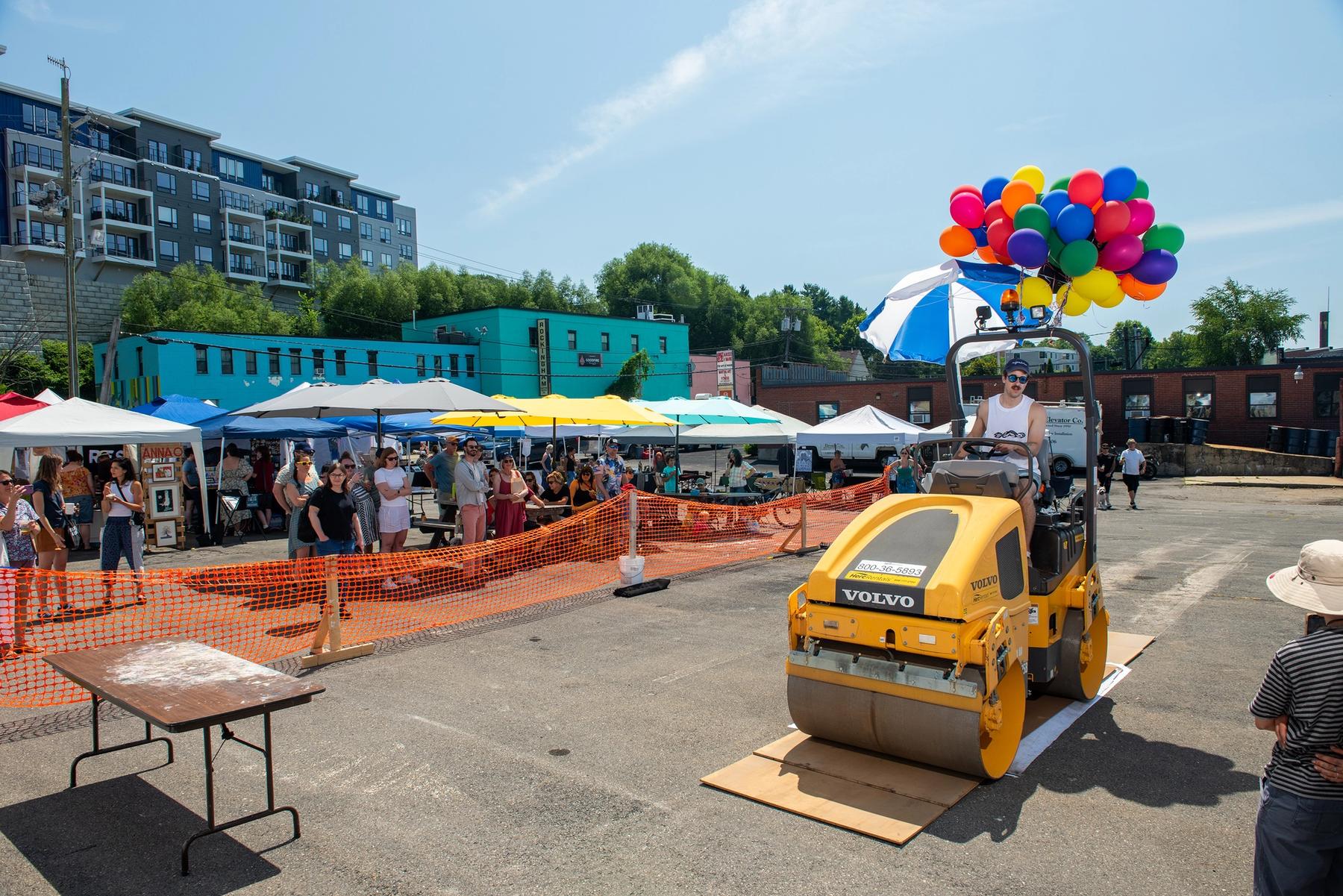
Carter Shappy ’15 driving a steamroller over a woodblock print during the annual Print Jam at artist studio, Running with Scissors in Portland, Maine. Photo by Bret Woodard
Few people in Maine are more committed to supporting artists’ professional horizons than the founding director of MECA&D’s Artists at Work program, Jessica Tomlinson. An inveterate creative connector with an expansive roster of collaborators built over decades, Tomlinson has an uncanny gift for aligning needs with opportunities and protégés with mentors. Her deep understanding of the forces that have shaped Maine’s creative terrain has given her a firm grasp on the histories and practices that have led to the success of thriving artists, designers, and local arts organizations like SPACE Gallery, Running with Scissors Studios, and Peregrine Press, all of whom count MECA&D alums among their staff and participating artists.

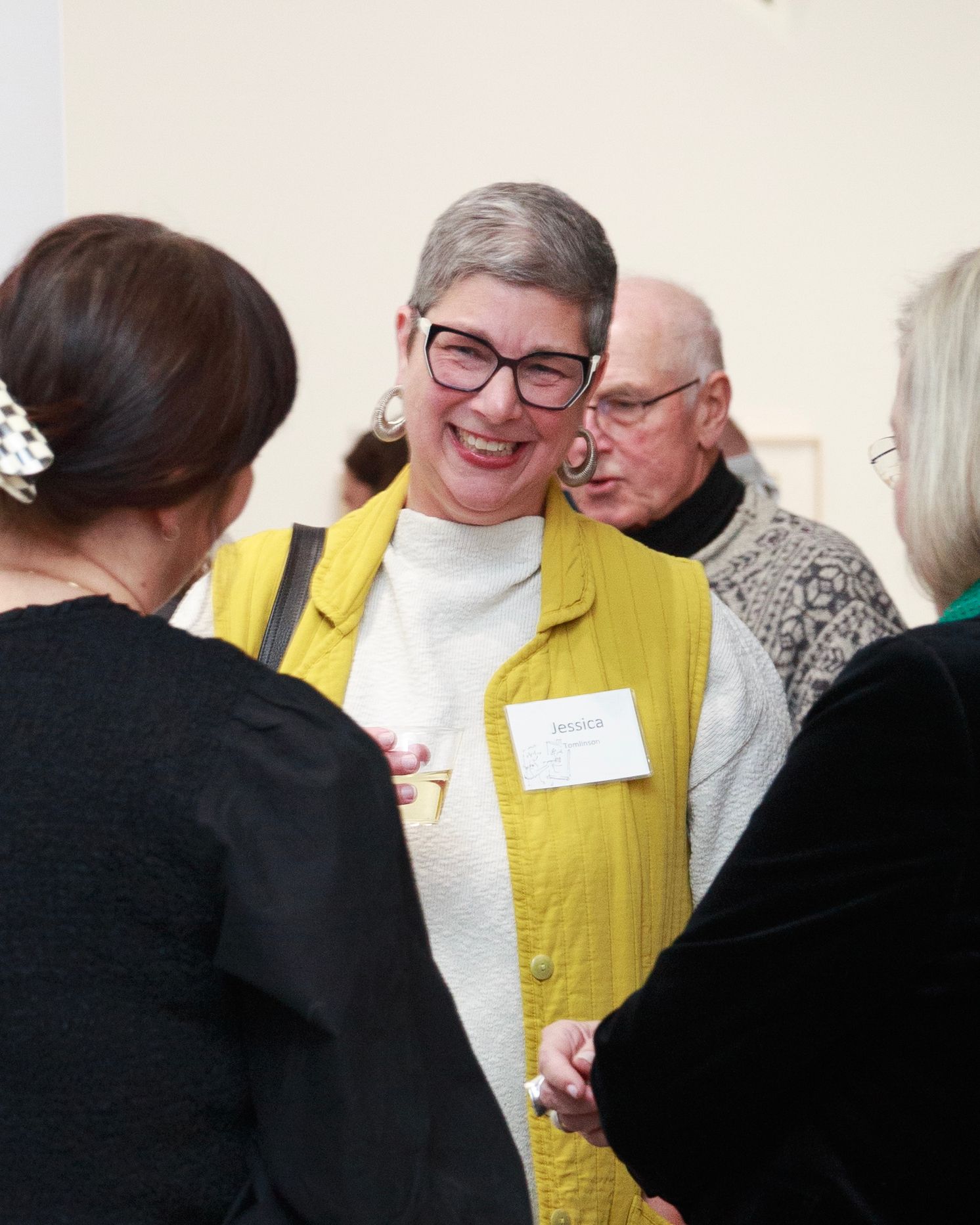
Jessica Tomlinson, founding director of Artists at Work. Photo by Natalie Conn, Salt ‘07
Through Artists at Work, the College’s program supporting students’ and alumni’s professional pursuits, Tomlinson has played a pivotal role in helping students contribute meaningfully to the arts ecosystem in Portland and Maine. Under her guidance, MECA&D undergrads and grads have gained professional footholds at established organizations and companies such as the Portland Museum of Art, Maine Crafts Association, and L.L.Bean; they have created murals for and taken on design projects for area hospitals, businesses, and nonprofits; and launched their own creative ventures.
82Parris is one such endeavor. The artist-run gallery and event space in Portland’s Bayside neighborhood was founded in 2023 by MECA&D grads Hannah Day ’20, Kat Miller ’19, and Kincaid Pearson ’19, along with fellow artists Holden Willard and Annie Conant. Over the past three years, 82Parris has grown into an established exhibition site, offering opportunities for guest curators and artists to stretch their ideas and gain new skills. Offering six to seven shows annually during the warmer months, the space follows the seasonal rhythms of Maine while supporting projects that may not otherwise come to fruition. In 2023, their aptly titled group show, Vacationland, featured work by Maine artists whose side gigs in the tourism and service industries support their creative practices. Other notable projects and exhibitions include Nick Gervan’s solo show Portlanders which featured photographs he captured around the city at night while recovering from a traumatic head injury, and the group show Mystics of Home curated by Kat Miller, that explored the roles of nostalgia and imagination in shaping a sense of belonging.
Support from more established artists and arts administrators has proven essential to the success of 82Parris. Plans for the organization coalesced during a winter Pearson and Willard spent living and working in artist Katherine Bradford’s home and studio in Brunswick, where they had the time and space to think, make, and ideate in partnership with the gallery’s other founders. Bradford, who seasonally offers her Maine house and studio to emerging artists, continues to support 82Parris through donations to its auction fundraisers alongside other established Maine artists, including MECA&D graduates James Parker Foley MFA ’20 and Meg Hahn ’17. The gallery’s 2025 year-end auction grossed more than $11,000, helping to fund projects in the year ahead.
Pearson also credits Tomlinson with providing invaluable advice and mentorship during the gallery’s formation. “I attribute a lot of our successful start to Jessica,” Pearson says. “She’s a wealth of knowledge and an amazing resource.”
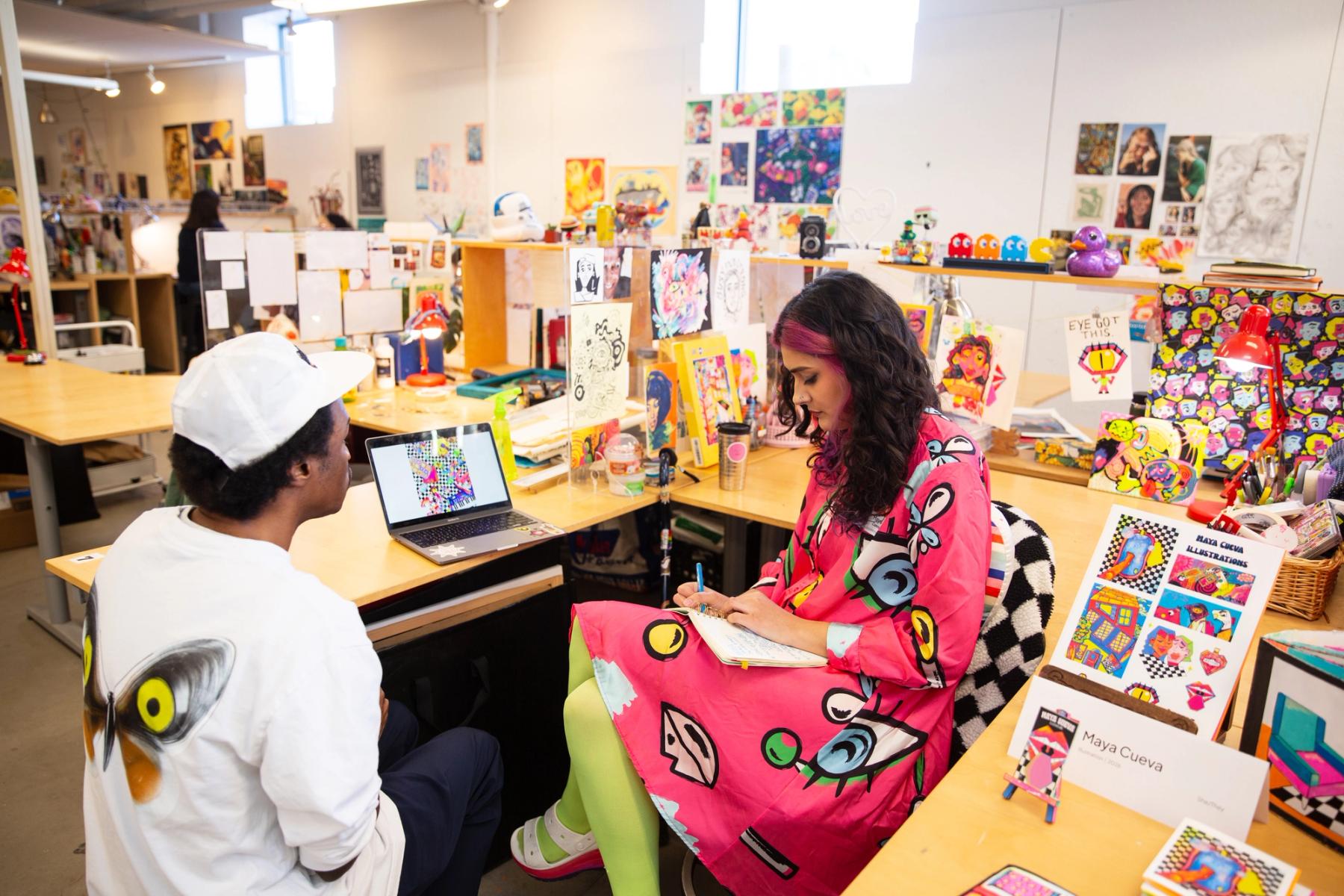
Illustration major Maya Cueva ’26 during Portfolio Day. Photo by Natalie Conn, Salt ‘07
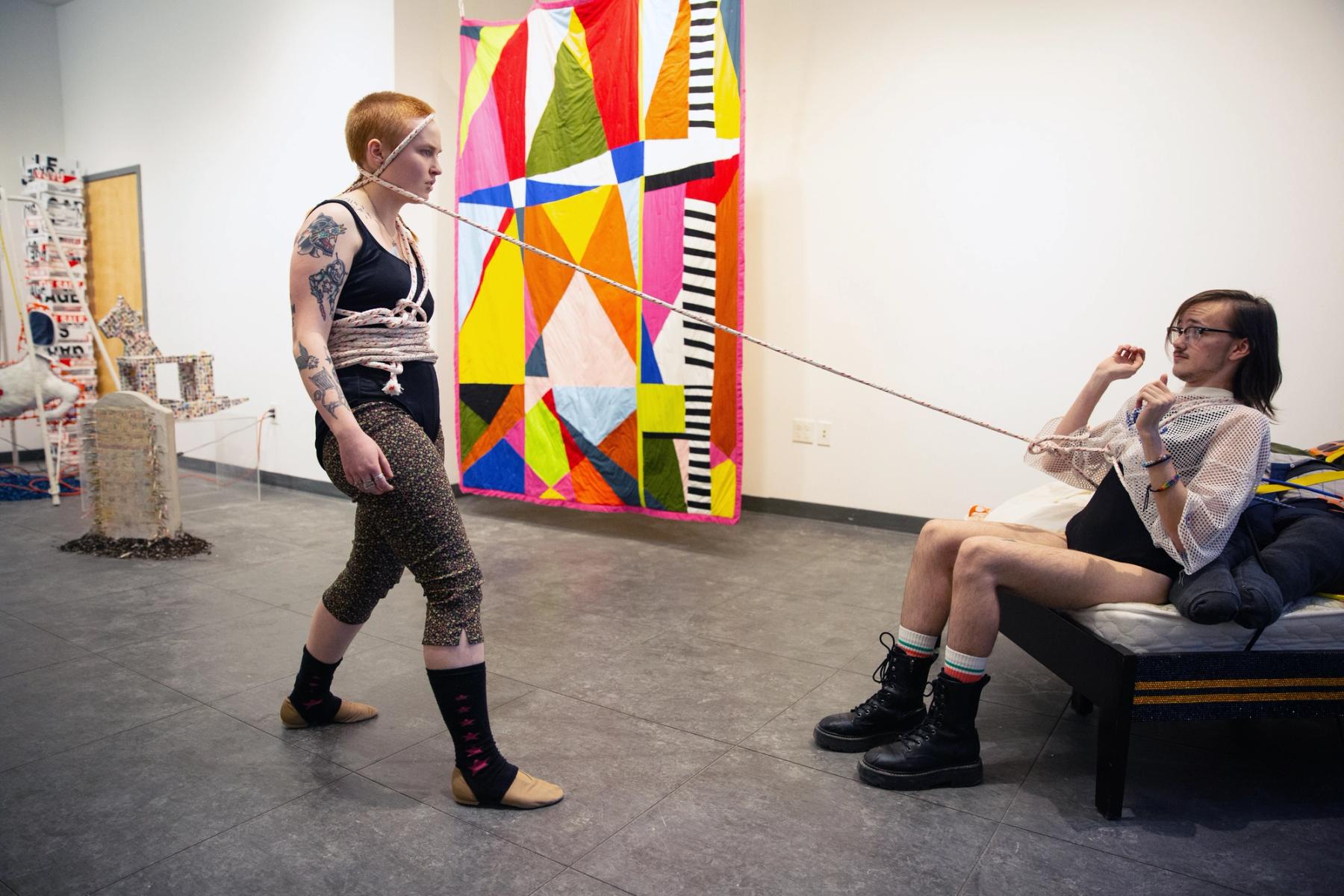
Redford Reece '26 and Stan Lambert '25 performing in their exhibition at 49 Oak titled Faith in Something More. Photo by Natalie Conn, Salt ‘07
Looking ahead, Pearson’s vision for 82Parris is firmly rooted in the realities of sustaining an arts nonprofit. “Since we received our 501(c)(3) status, managing the organization has become my creative outlet. Because I’m so passionate about our longevity, that’s where my energy is going right now. Our goal is to have a sustainable budget and funding stream by the start of 2028. Beyond the budget, being a connector to grow the spiderweb of organizations and people who want to see the arts thrive is at the core of what we are trying to do. We’re really trying to build a network among artists and alternative arts spaces within Maine and beyond.”
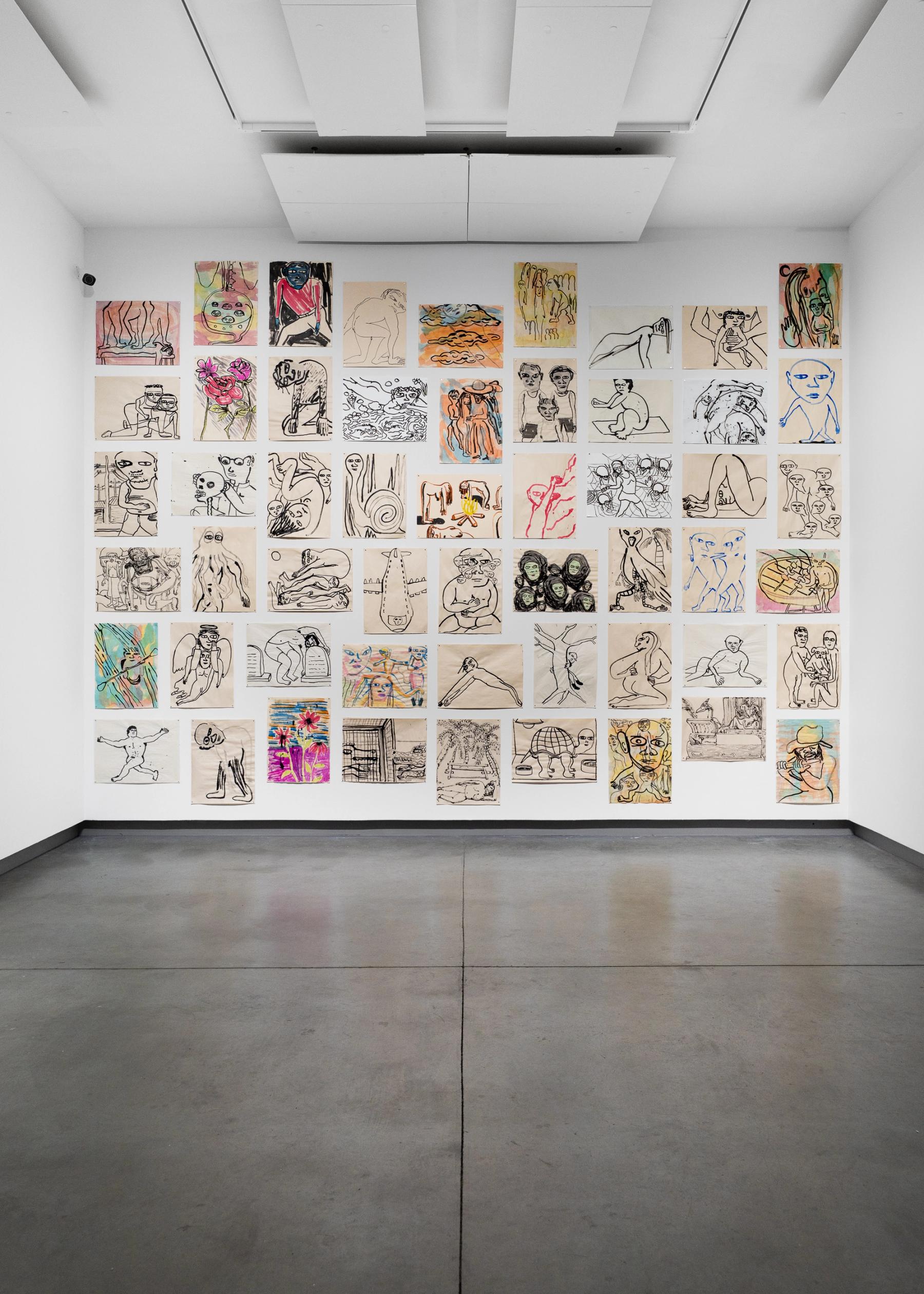
Ralph Pugay, Selected Drawings, 2018–2025. Photo by Joel Tsui ’16, Salt ’17, MFA ’19, image courtesy of the ICA at MECA&D
Tomlinson recalls similarly deliberate efforts in early-2000s Portland to build bridges with creative ecosystems beyond the state’s borders, pointing to initiatives like Two Degrees Portland, a campaign designed to introduce “interesting people” to one another across disciplines and cities. “Maybe it was a little too effective,” she laughs, reflecting on the influx of out-of-staters who have since put down roots in Maine. The effort ultimately forged enduring ties between writers, artists, designers, and technologists who settled locally while remaining connected to New York, Boston, Los Angeles, and beyond, opening pathways that others have since followed.
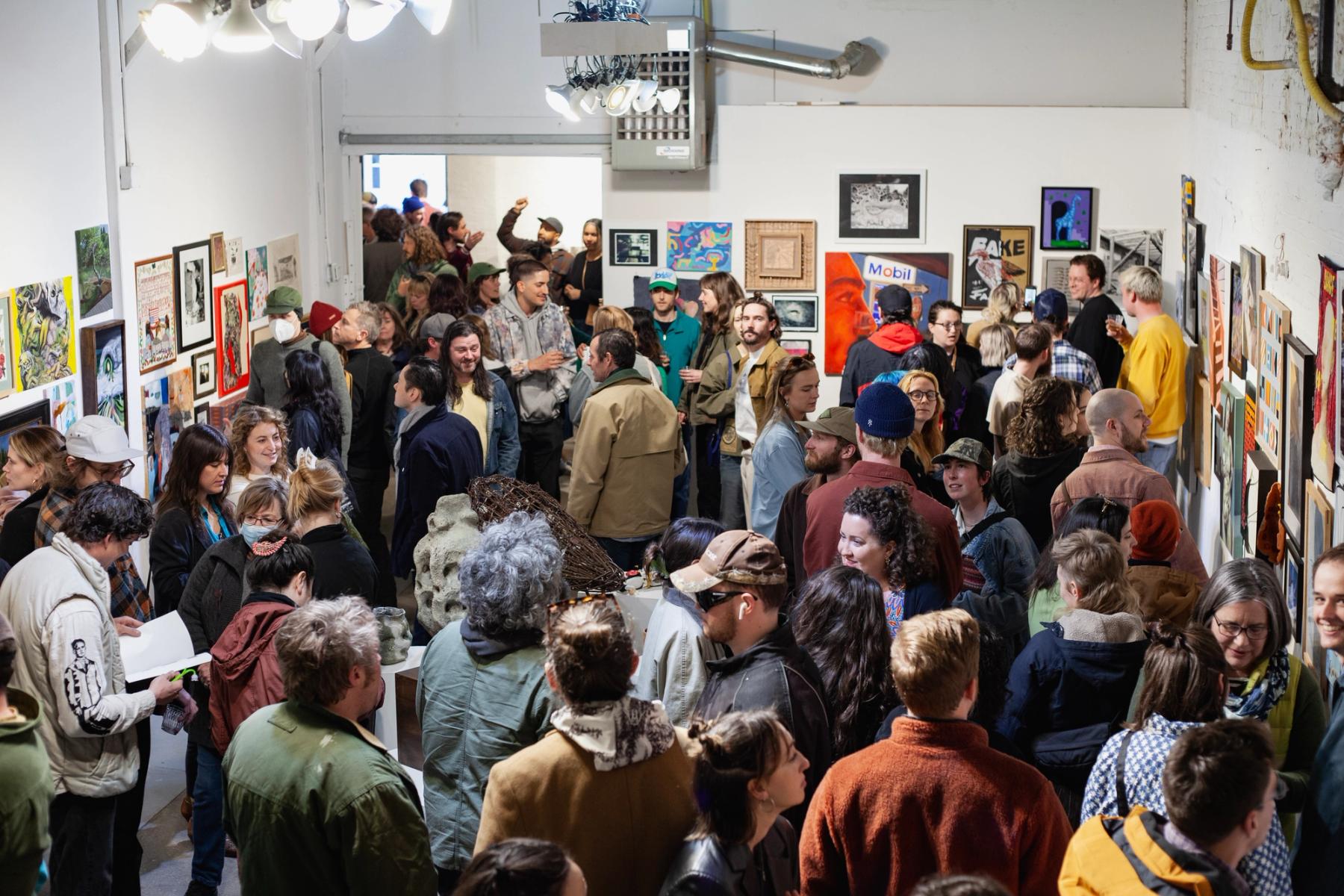
Opening of 82Parris's inaugural show, House Warming, in 2023
Tomlinson also notes that the pandemic helped collapse entrenched assumptions about geographic limitations to connection. “You no longer have to live in New York to be known in New York,” she posits, pointing to Maine-based artists with national success such as Anne Buckwalter MFA ’12, represented by Zürcher Gallery in Manhattan, and Tessa Greene O’Brien MFA ’16, who has shown with Candice Madey Gallery (NYC) and Halsey McKay Gallery (Easthampton, NY). Pearson sees a direct arts pipeline between New York City and Maine, citing Karma Gallery’s outpost in Rockland and other New York-based gallerists who have their eye on and ties to Maine artists.
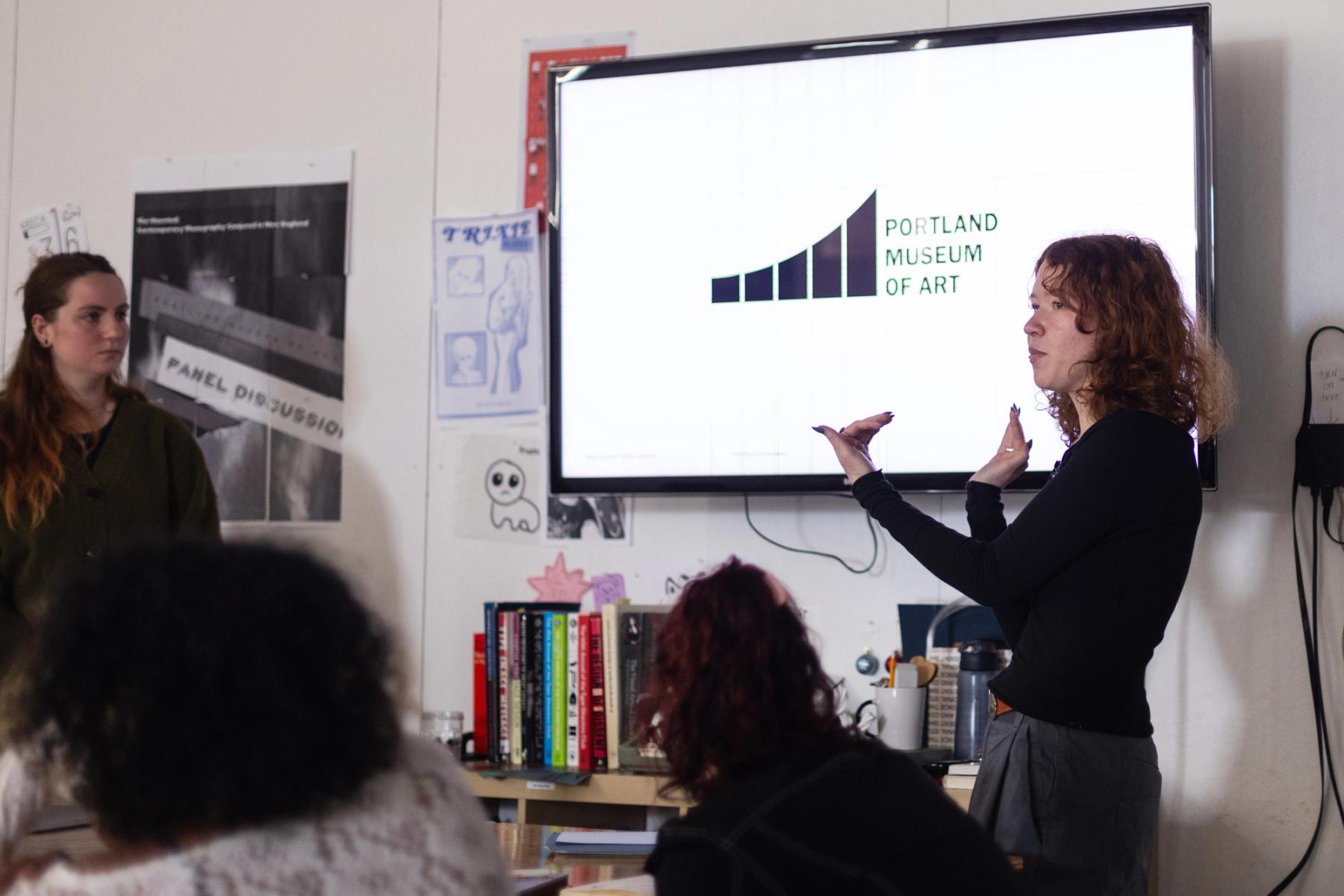
Graphic Design majors Molly Lawrence ’26 and Avery Johnson ’26 pitch their brand proposal to Portland Museum of Art representatives for their Professional Studios course. Photo by Natalie Conn, Salt ‘07
Although this metaphorical shrinking of distance has provided many positive outcomes, Maine’s higher profile has been accompanied by a sharp rise in the cost of living. With Portland home prices up 85% and the number of rentals costing more than $2,000 per month increasing by 171% since 2019, current economic realities dampen the conditions artists need to thrive. Pearson cites a lack of affordable studio space as one of the biggest impediments to emerging artists’ progress. Efforts on the part of local organizations and funders aim to counteract these impacts, such as SPACE’s Kindling Fund, a re-granting program affiliated with the Warhol Foundation that provides project grants to Maine Artists, MECA&D’s Belvedere Fund, which supports professional development for craft artists, and the Onion Foundation’s organizational grants that offer operational and project support to arts organizations.
Individual artists are also tackling these challenges by sharing their resources and connections. Tessa Greene O’Brien makes a concerted effort to build bridges through her channels to the broader art community. She runs the Instagram account Aunties Projects (@aunties_projects), which posts classified ads for creative circles in Maine and New York City. Started in August 2024, the account now has more than 3,000 followers and shares posts offering or seeking short- and long-term housing, studio space, rideshares, art transport, pet sitting, and more. O’Brien takes a collectivist approach to her career, attributing her success, in part, to those who helped her along the way. Today, she aims to, as she puts it, “Drag others through any door I open along with me.” This can mean suggesting artists to curators for shows, fielding introductions to gallerists, offering advice and support, and consistently showing up for the broader creative community in person and online.

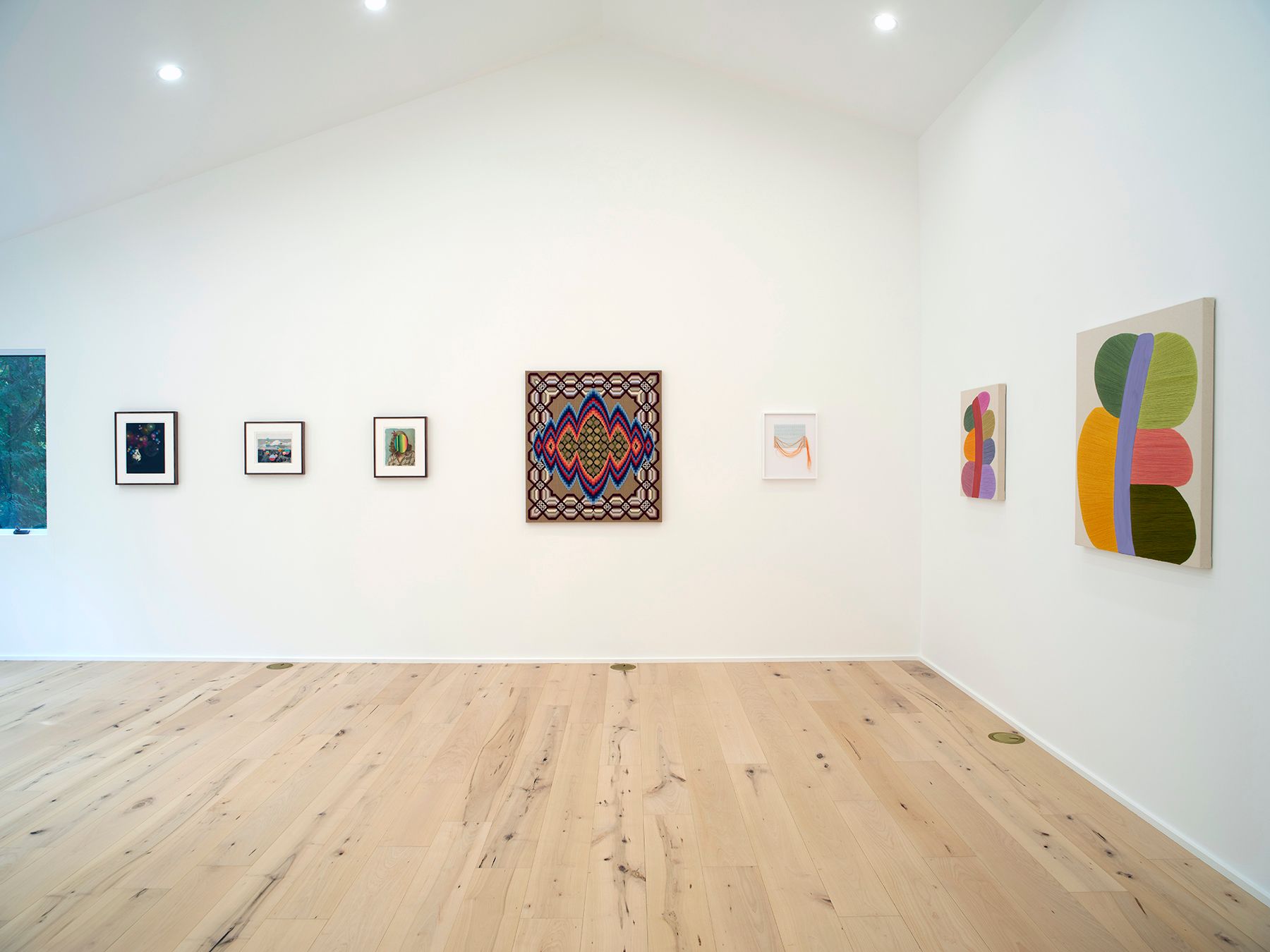
Every Infinitesimal Thought at Sarah Bouchard Gallery in Woolwich, Maine
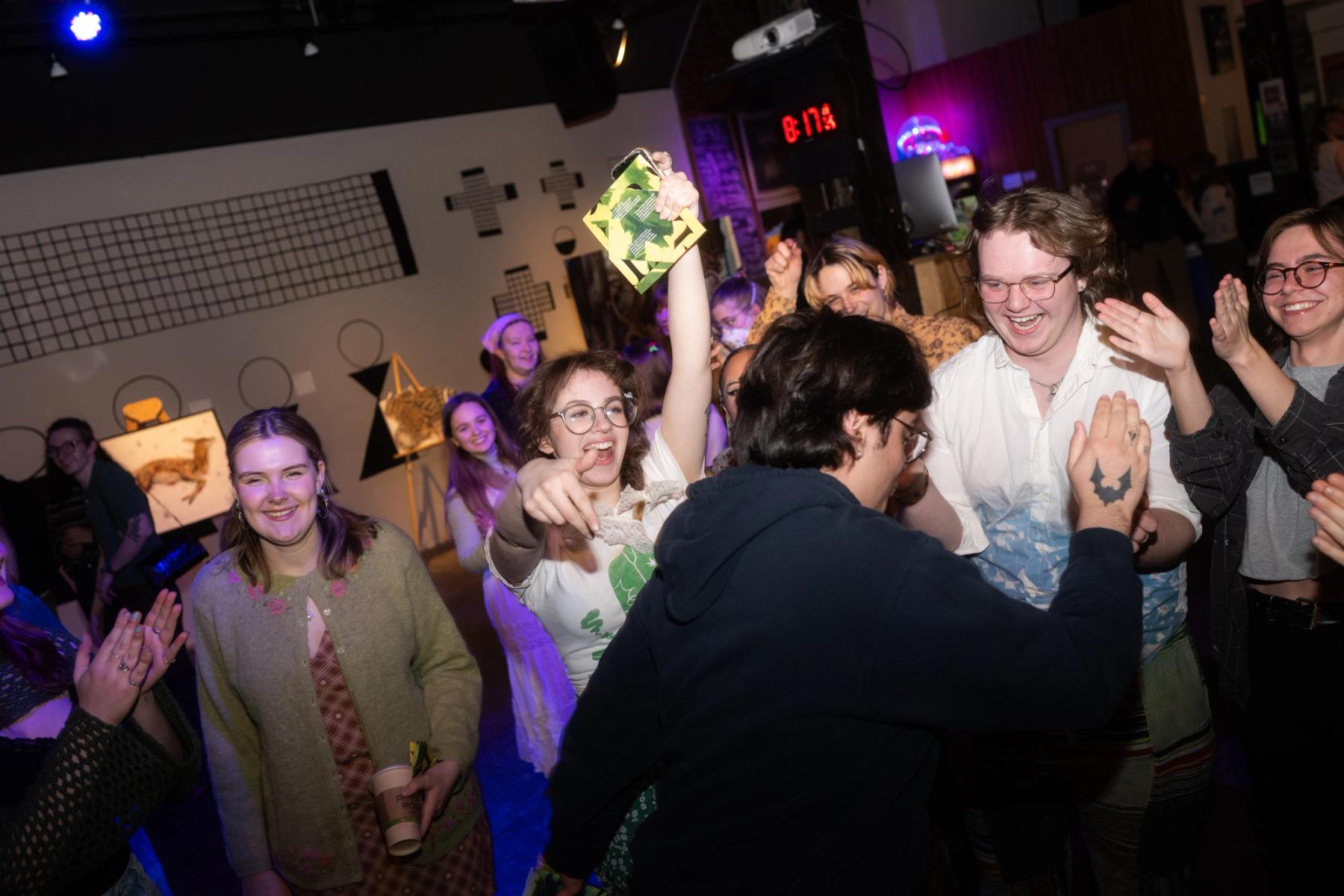
Natural Affinity, an exhibition and event organized by Zach Liljeholm ’25 at SPACE Gallery in Portland, Maine
The creative community in Maine—and in Portland, particularly—is a small pond. This allows for connections to develop organically, with many finding they are connected by less than one degree of separation. A significant upside of this accessible scale is the opportunities that MECA&D students can access as a result. Adjunct Instructor of Graphic Design Amy Parker teaches a professional practice class for Graphic Design majors, which helps students get to know the various design studios and designers in Portland. These early introductions have led to internships and jobs for students and recent graduates at the VIA Agency, Garrand Moehlenkamp, and other local design studios. Parker has spent much of her career in Boston and finds Portland’s creative climate to be more collaborative and kind. As she succinctly puts it: “You can’t be a jerk here. Everyone knows you too well. And if they don’t know you well, they know of you.”
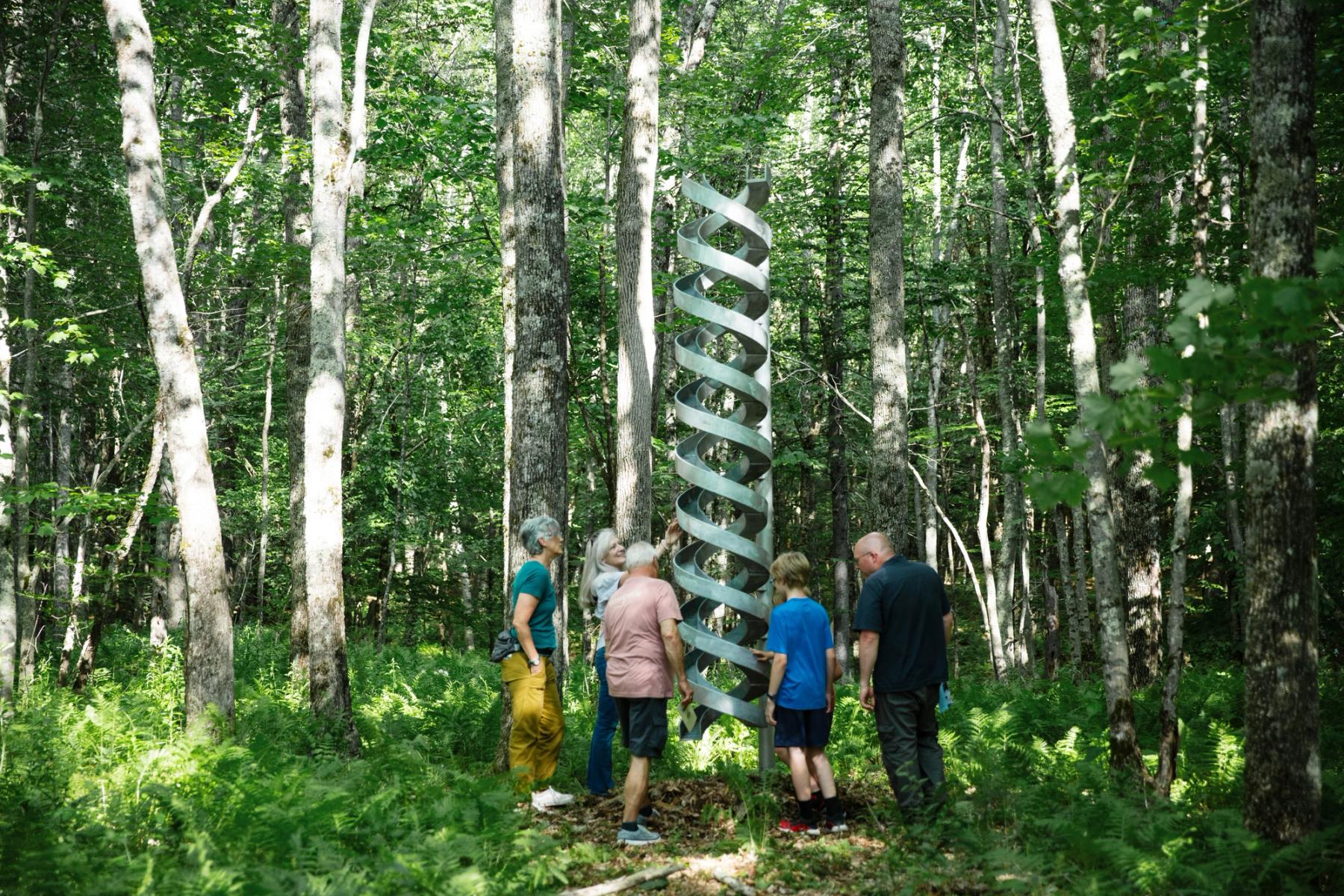
Matt Crane, tidal tail, 2016, featured in One Less Traveled, an exhibition on view through May 2027 at LongWoods Preserve in Cumberland, Maine, curated by MECA&D Gary Ambrose Chair of the Sculpture Program Joshua Reiman. Photo by Natalie Conn, Salt ‘07
However, Maine’s sprawling geography and dearth of urban centers allow some exceptional artists and essential ideas to operate undetected by the broader creative ecosystem. Sarah Bouchard MFA ’11 has set out to correct some of these omissions by bringing the national and international creative conversation to the forefront in Maine. Her gallery in Woolwich, 30 miles up the coast from Portland, boasts a roster of artists and work that are not necessarily shown elsewhere in the state. Bouchard opened the gallery in 2021, after several years as the director of the Corey Daniels Gallery in Wells, Maine. An artist in her own right who has balanced a personal creative practice with curatorial and gallery work, she has worn many hats and understands the value of a committed artist-gallerist relationship. These deeply valued connections, which are central to her gallerist work, have taken many forms and relied on communal support to flourish over the years.
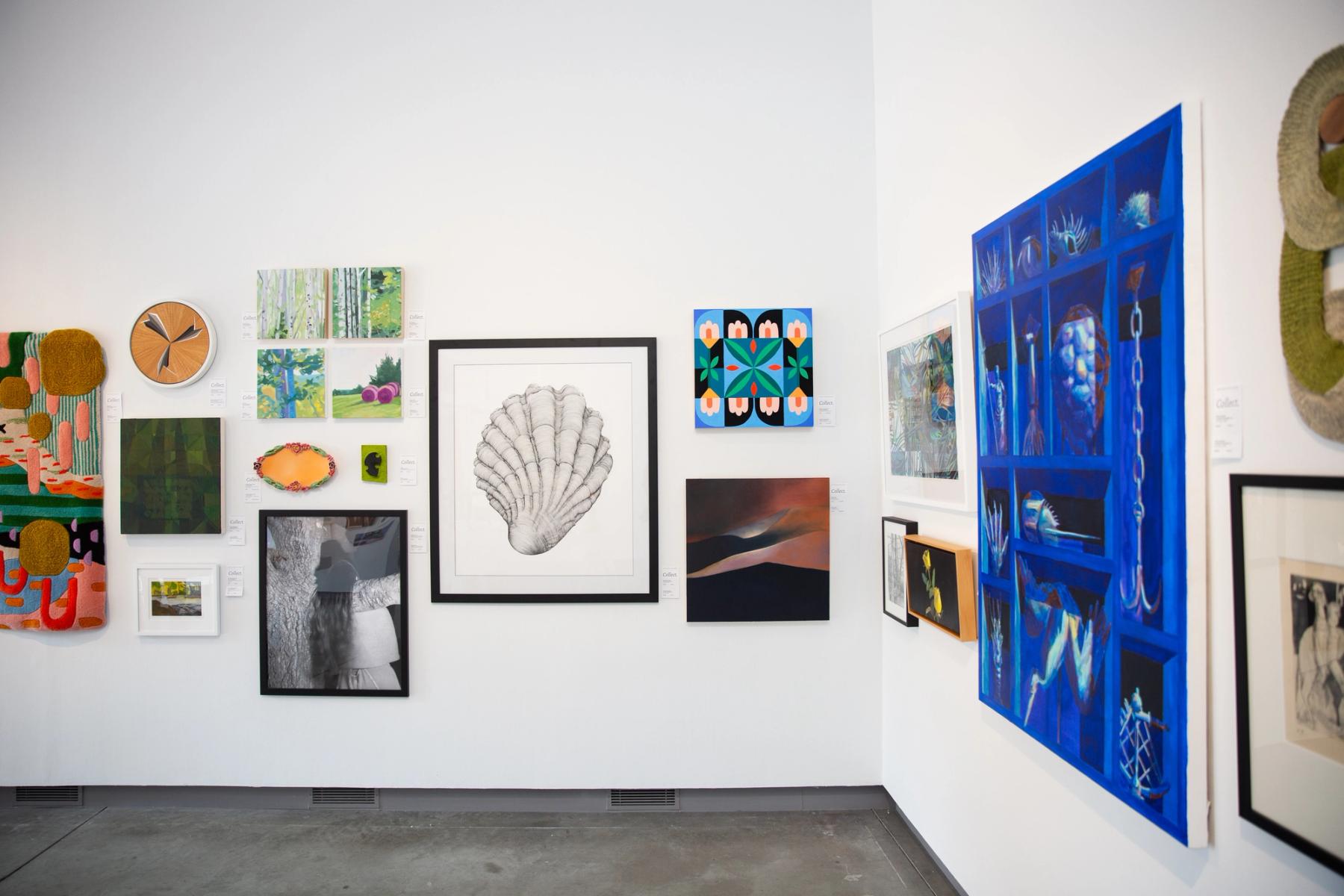
The Collect Art Sale at the Institute of Contemporary Art at MECA&D
“There are phenomenal artists here in Maine—both seasonally and year-round—who aren’t necessarily getting the visibility their work deserves in the state. When I first started out [on my own], for a short period, I was meeting with clients and showing work out of the back of my car. And then a very strong artist who is a complete powerhouse nudged me to start my own gallery. I was looking at New York and then realized I could honor the integrity of my artists’ work by creating a gallery in this space, here.”
Bouchard also credits collectors with whom she had established relationships, helping her get the gallery off the ground. But the artists who continue to work with her were the primary drivers for her new endeavor. They have encouraged, advised, cajoled, and advocated for her, just as Bouchard does for them and their work.
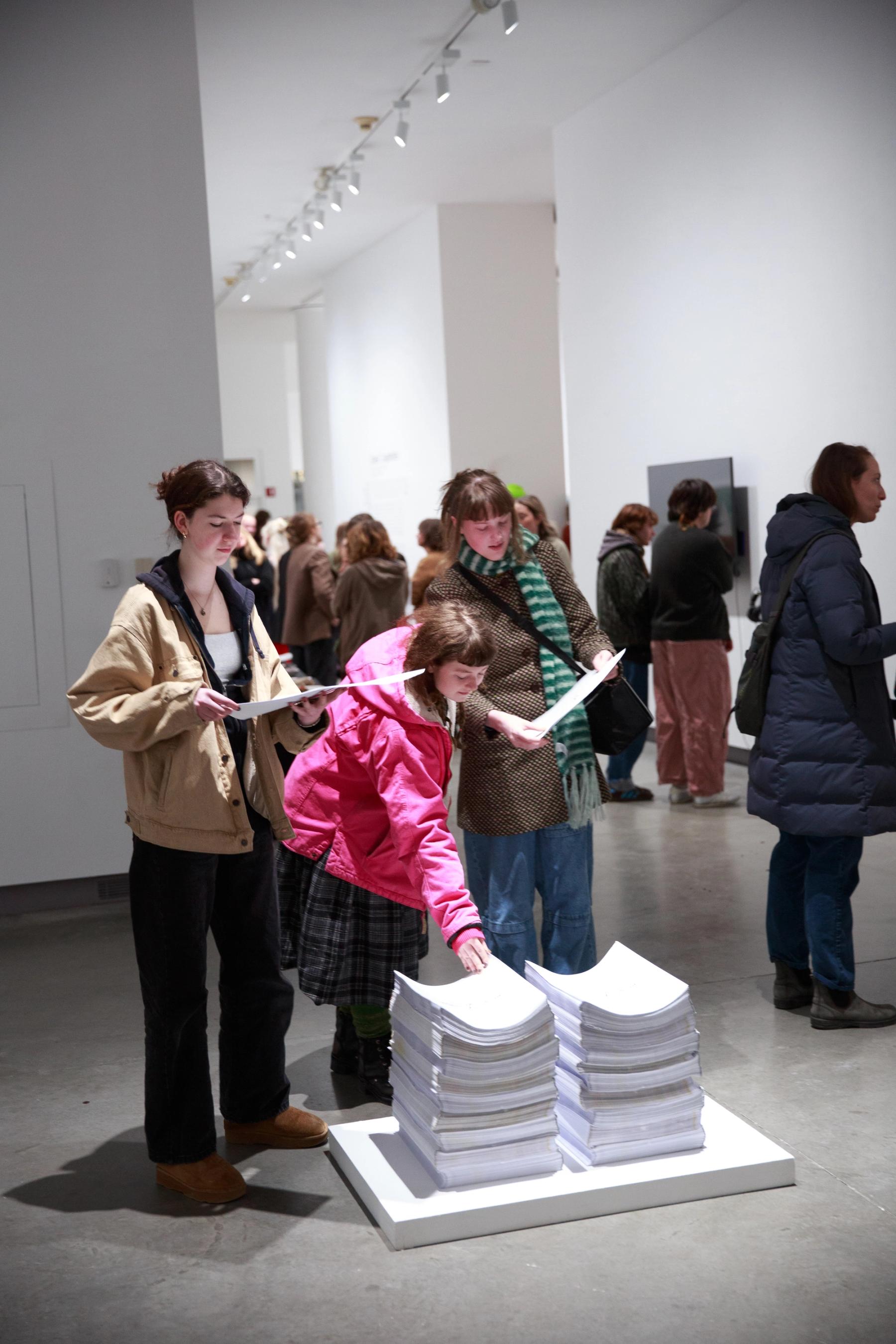
Opening of Lines / Loopholes at the Institute of Contemporary Art at MECA&D. Photo by Natalie Conn, Salt ‘07
A perennial experimenter, Bouchard continues to find innovative opportunities to collaborate with artists within the gallery framework. In 2025, she partnered with Portland-based artist Kate Russo, who is represented by the gallery, to co-curate Every Infinitesimal Thought, an exhibition that drew connections between traditional embroidery and the language of contemporary abstraction. Featuring works that combine thread with pencil, oil paint, photography, and gold leaf, the show brought together artists from two continents, exemplifying how creative ideas transcend geography.
“This is the first in a series of exhibitions where I worked with an artist to realize a dream curatorial vision,” Bouchard shares. “The point of the series is to have an artist who hasn’t curated learn more about the curatorial process, and Kate was an amazing partner to experiment with.”
When considering qualities artists need to thrive in Maine, Bouchard points to a hardiness of resolve and comfort with solitude. Maine’s rugged landscape, sparse population, and fierce winters create conditions that require one to manage well in relative isolation. Bouchard speculates that while the cycle of retreating to the studio and emerging with new ideas connects to a long tradition among Maine’s artists, it doesn’t have to be a limiting factor. If anything, understanding how our spaces, geography, and networks shape the kind of arts ecosystem Maine can sustain allows participants to adapt to its idiosyncrasies and evolve to meet these realities. By embracing seasonal rhythms in their careers and deliberately building strong creative ties within and beyond the state, artists sustain a network that transcends geographic and seasonal constraints.

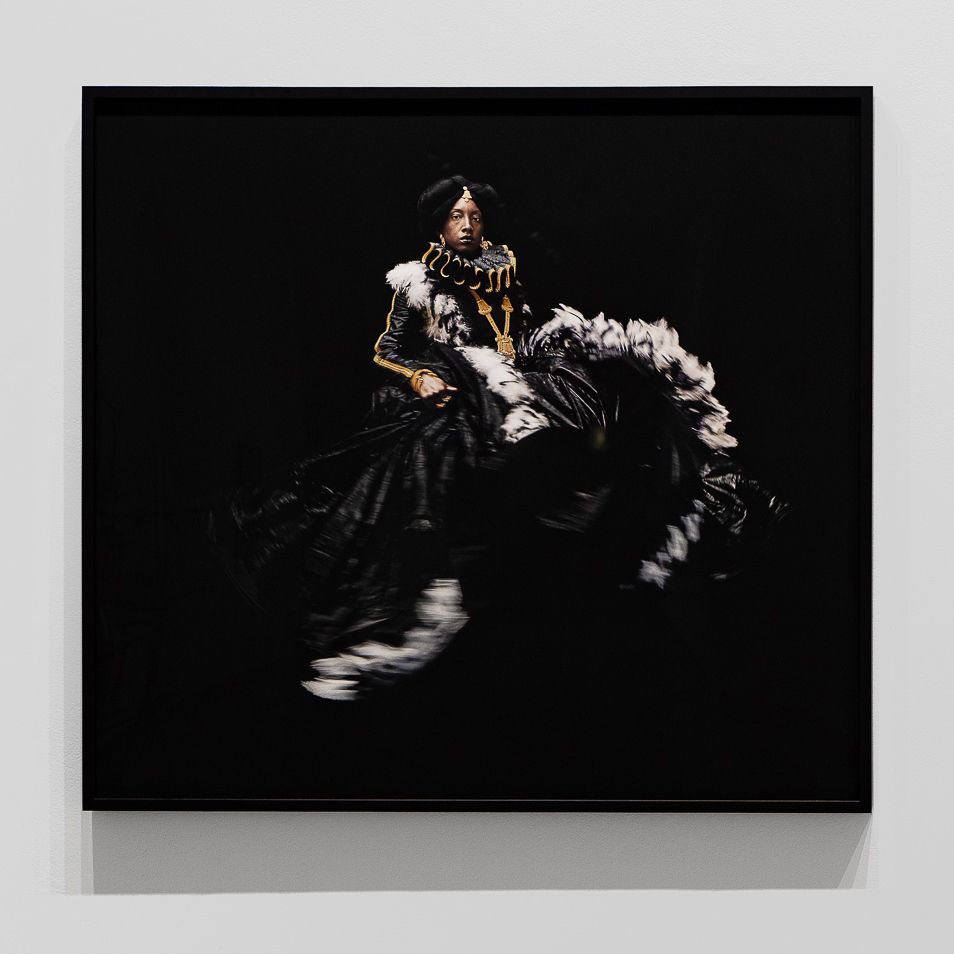
Ayana V. Jackson, Consider the Sky and the Sea, 2019. Photo by Joel Tsui, image courtesy of the ICA at MECA&D
These artists, educators, gallerists, and advocates represent just a fraction of those sustaining Maine’s arts ecosystem. Like many Mainers, they rely on ingenuity to forge unconventional careers shaped by both necessity and intention. They thrive through collaboration and mutual support, carrying the foundation built at Maine College of Art & Design into the state’s evolving, interdependent creative landscape and across the broader regional, national, and international arts ecosystems.
Words by Claire Brassil.