
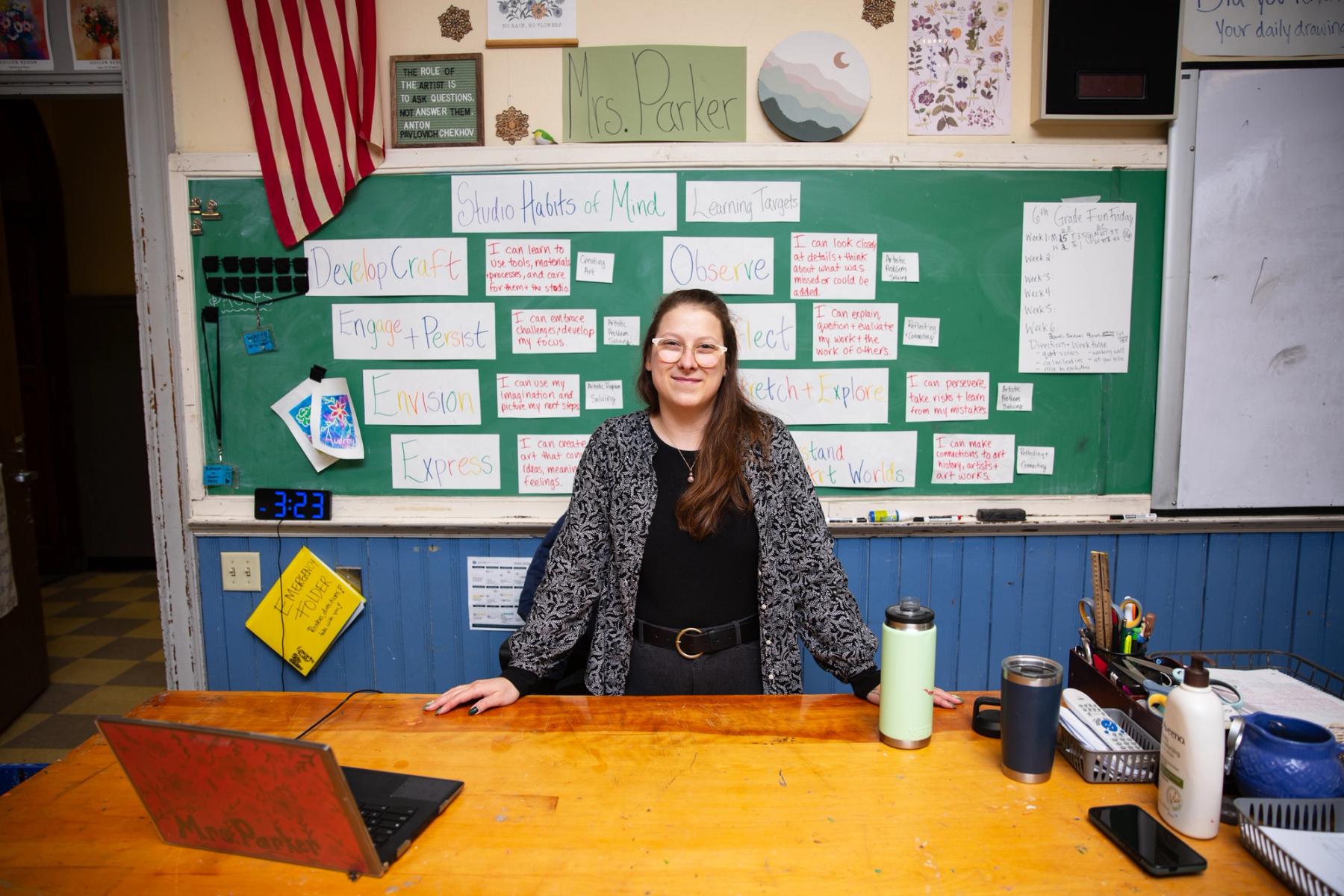
Audrey Parker BFA ’19 MAT ’21 is a graduate of MECA&D’s MAT 4+1 program, and an art teacher at Lincoln Middle School in Portland, Maine. From experimenting with materials as an MAT student to leading with a choice-based curriculum for her students, Parker brings the creative curiosity she developed as a student into the classroom.
What brought you to MECA&D, both for your Bachelor of Fine Arts and your Master of Arts in Teaching?
I grew up in Maine, and in high school, my art teacher hosted a MECA&D admissions counselor to visit our school. I was blown away by the idea of art school and a teaching degree in one! I’d never heard of that before.
I showed up at MECA&D, and I was like, “I want to do this,” and they helped me set up the process to get my bachelor’s degree in painting and then move on to become an art teacher.
What did a typical day look like for you as an MAT student?
It was a lot of collaboration with my small cohort. We did a lot of lesson planning, playing with materials, and learning about child psychology. Since it was during COVID, we were hybrid at the time, and had virtual observations, virtual co-teaching, along with in-person teaching. We would share lessons and practice teaching together a lot.
When we practiced teaching, it was to our cohort of 13 students. We made slides, brought kits, prepped the materials and then we went through the whole lesson to practice our pacing and our teaching voices.
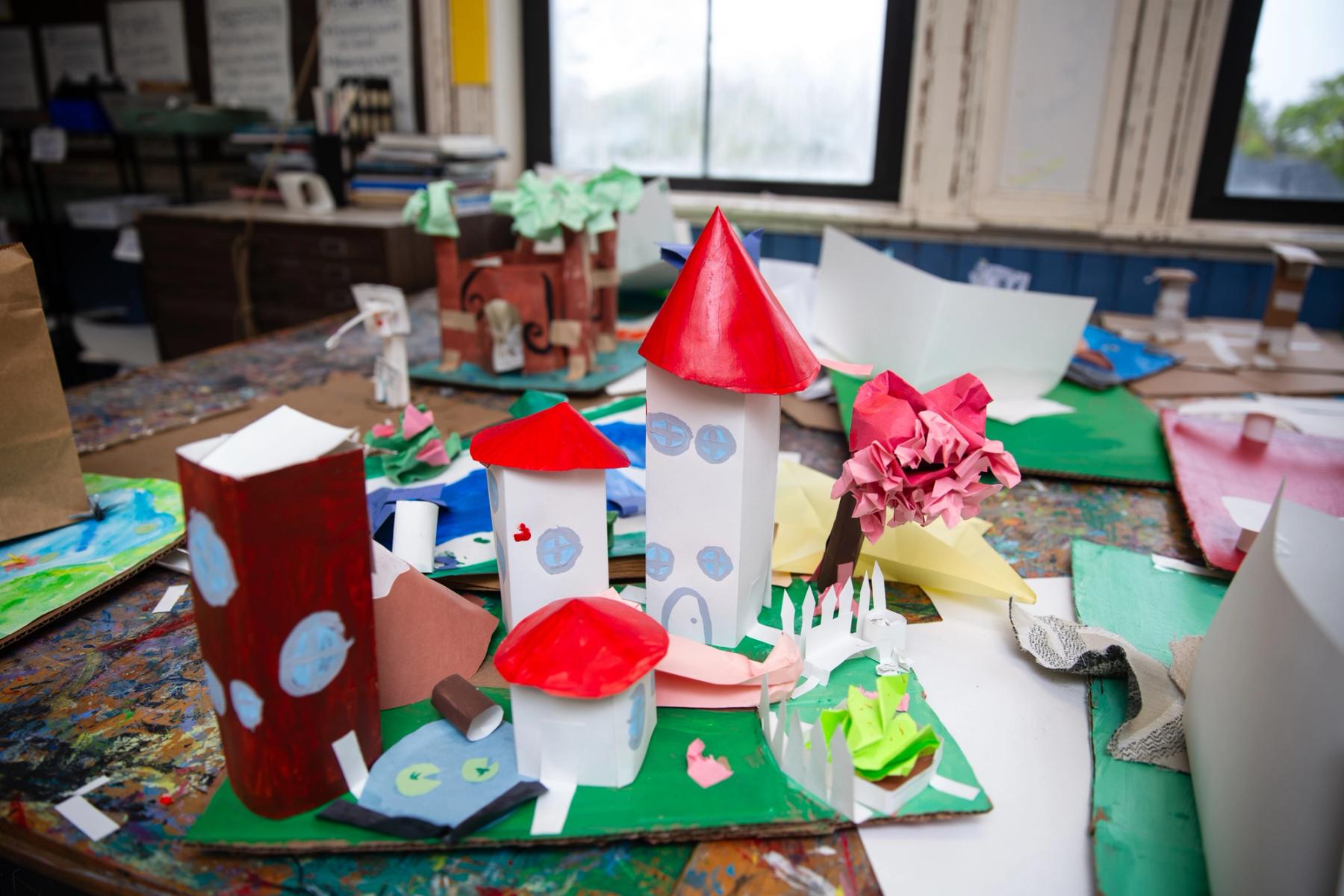
Student artwork in Audrey’s classroom. Photo by Natalie Conn, Salt ‘07
What do you remember from the early days of learning to be a teacher?
I was really excited to play with so many materials. When I was in the BFA program, I was very specialized. Then when I started the MAT program, it was like I got to play with everything, experiment, and see what weird things I could come up with and combine. It was really inspiring.
I think a lot of that carries into my classroom today. We’re very experimental, and there’s a lot of choice.
My students’ favorite right now is soda cans. I have to bring in soda cans at least twice a week. One group is making a five-foot lighthouse out of them, and another group is making flowers. There are lots of things happening with soda cans!
What lessons did you learn at MECA&D that you bring to your classroom today?
I learned how to be comfortable in a room full of kids. It was my first foray into special education, which has been a big focus of my continued learning journey. It was really nice to get that foundation in the MAT program and then keep learning more about special education as I’ve been teaching.
There was one course at MECA&D where we focused on what special education looks like in the classroom, how to read an IEP and a 504, and what accommodations and modifications can look like in the classroom.
Were there any faculty or peers in your program that were especially memorable?
When I was in the MAT program, it was Dr. Rachel Somerville’s first year as program chair. She was just the best cheerleader. She has high expectations and is good at encouraging you and pointing you in the right direction.
She would leave really incredible feedback and had a way of conversing that was very personable and friendly. It was a very “let’s do this together” attitude.
Now that this is my fifth year teaching, I’ll be able to take mentee teachers, and we’re planning to host a MECA&D mentee for this coming year. I remember for myself as a student, it was so helpful to have a preview of what teaching is like in the classroom before I started.
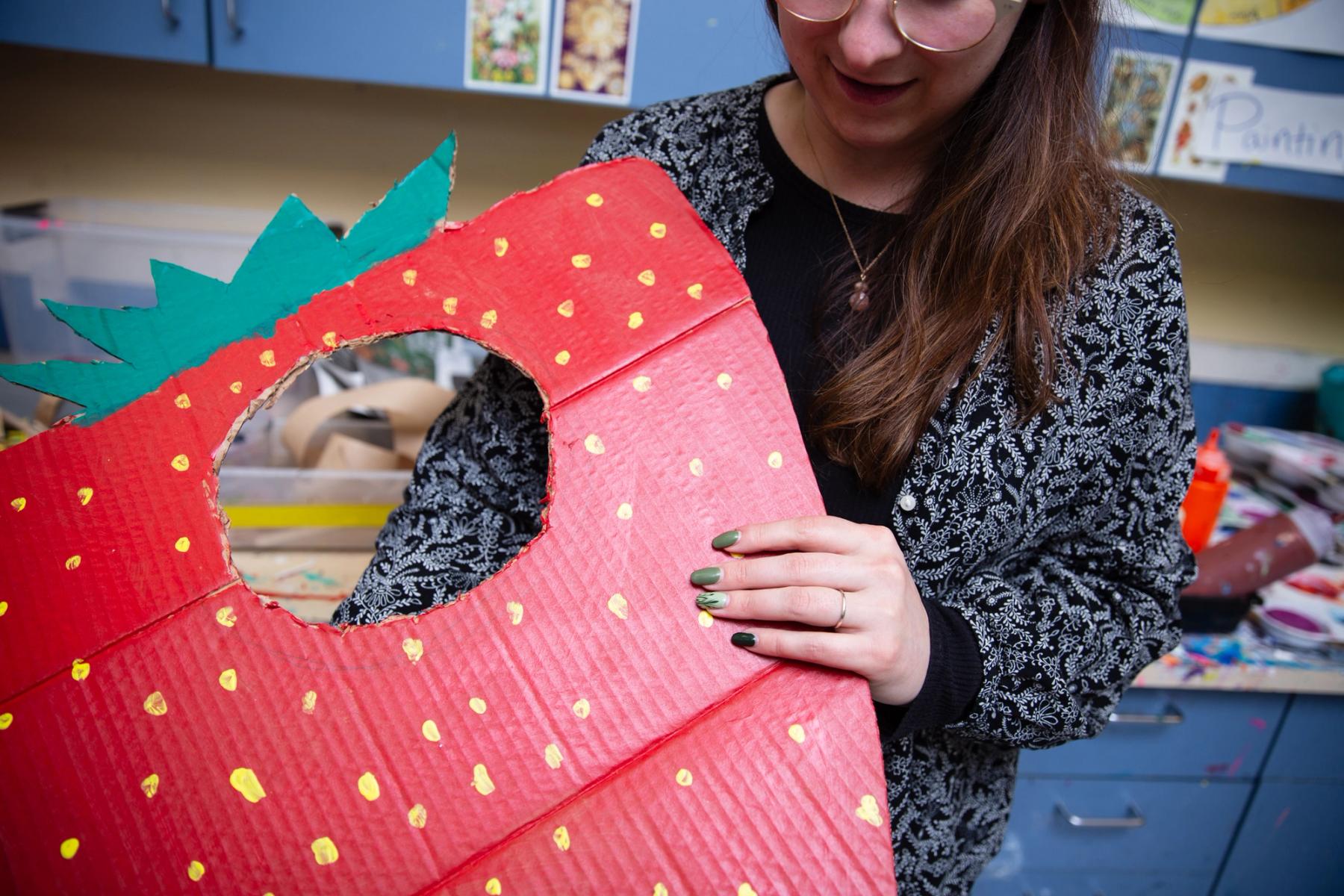
Audrey holds a piece of student artwork. Photo by Natalie Conn, Salt ’07
Did you always know that you wanted to teach middle school?
I’ve taught preschool through twelfth grade at this point. I taught at a private school and then as a long-term sub, and then I ended up in middle school with a permanent position. This is my second year teaching here.
Middle schoolers are really easy to engage. They’re very excited about materials and mess and fun stuff, but they can also work on complex techniques and long-term projects, which is really enjoyable.
What new things did you learn once you were managing your own classroom?
I learned how to build out a full curriculum. It was great to assemble the lesson plans I worked on in the MAT program and to sit down to create a curriculum for three grades for the whole year. Changing it and improving it year after year is a really interesting process, too.
What do you want students to learn in your classes?
Something we focus a lot on in my classroom is perseverance. Even if you don’t like art or you’re not happy with your project or what you’re doing, you can choose to keep building and adding until you’re happy with it or until you learn from it. We talk about the ugly stage of art and how to work through that instead of throwing it out.
I also try to teach them that it’s okay to be silly. It’s nice to be silly with the students, sing songs, play games, and act things out.
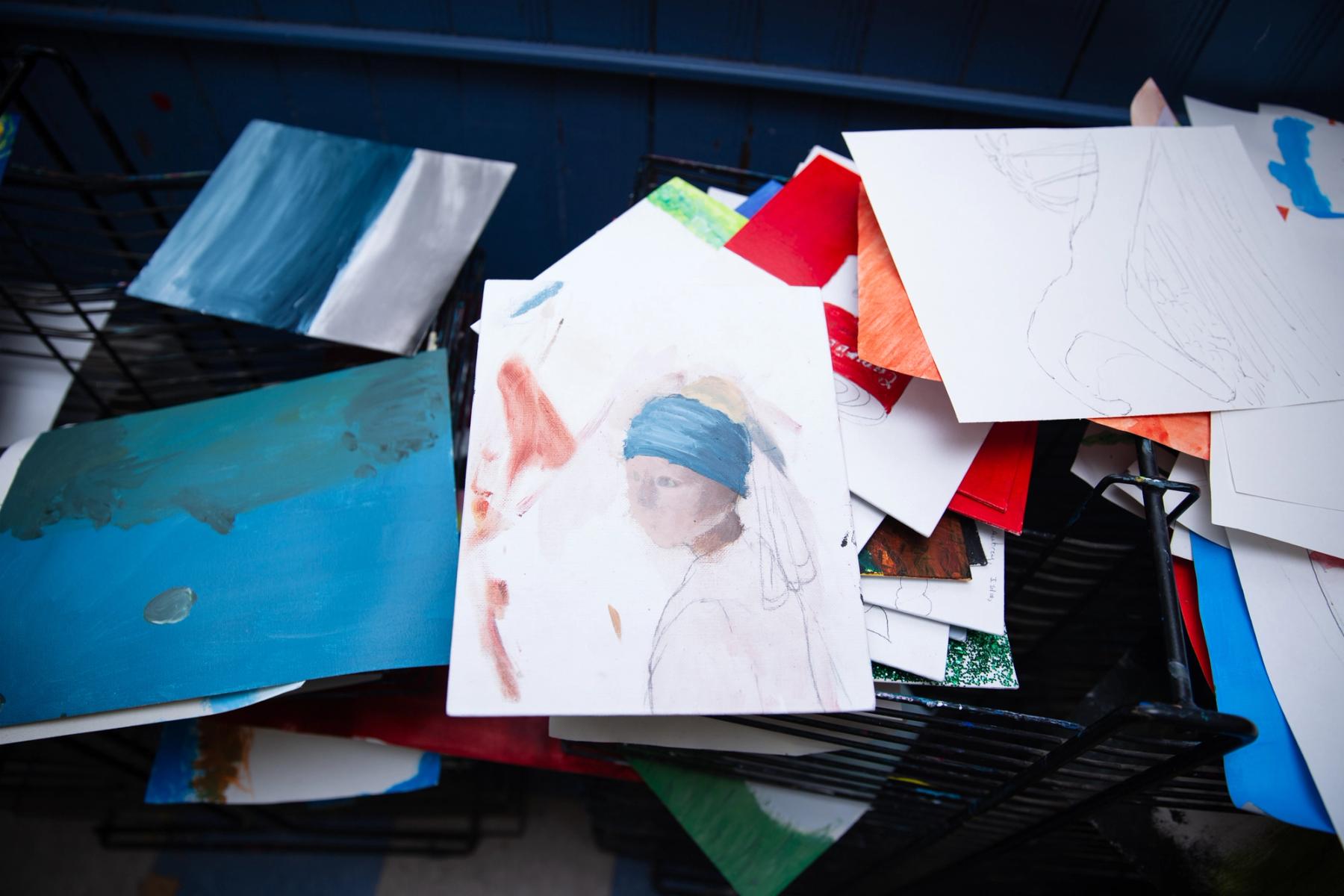
Student artwork in Audrey’s classroom. Photo by Natalie Conn, Salt ’07
When you’re not in the classroom, how does art education fit in the rest of your life?
I enjoy teaching people and hosting workshops. In the spring, I presented at the Maine Art Education Association Spring Conference in Belfast, and I led a group of art teachers in a watercolor workshop. They had so many great ideas and ways to add experimentation to their watercolors. It was more of a sharing experience, really, than a typical conference teaching experience.
I also teach watercolor classes at Factory 3, so I’m used to teaching adults, but it was a lot of fun to teach adults who were also teachers themselves.
I was also accepted to an MAEA residency on Monhegan Island this summer. I wanted to grow my watercolor practice, to get ready for a few more shows this year, and to start building an even stronger body of work.
What are your hopes for the future of your teaching practice?
I’d like to explore more non-traditional ways of teaching. Right now in the public school setting, I’m exploring choice-based curriculum instead of a project-based curriculum. When you’re making for a specific theme or material, you can introduce much more choice and freedom on the student’s side, so that you’re teaching to foster that artistic behavior and agency.
I also want to focus more on being a presenter and a leader, and I’m exploring more opportunities in workshops and adult education. I led a workshop at a bar mitzvah and at a shop downtown, and I’m working on spreading my wings in different ways of teaching.