
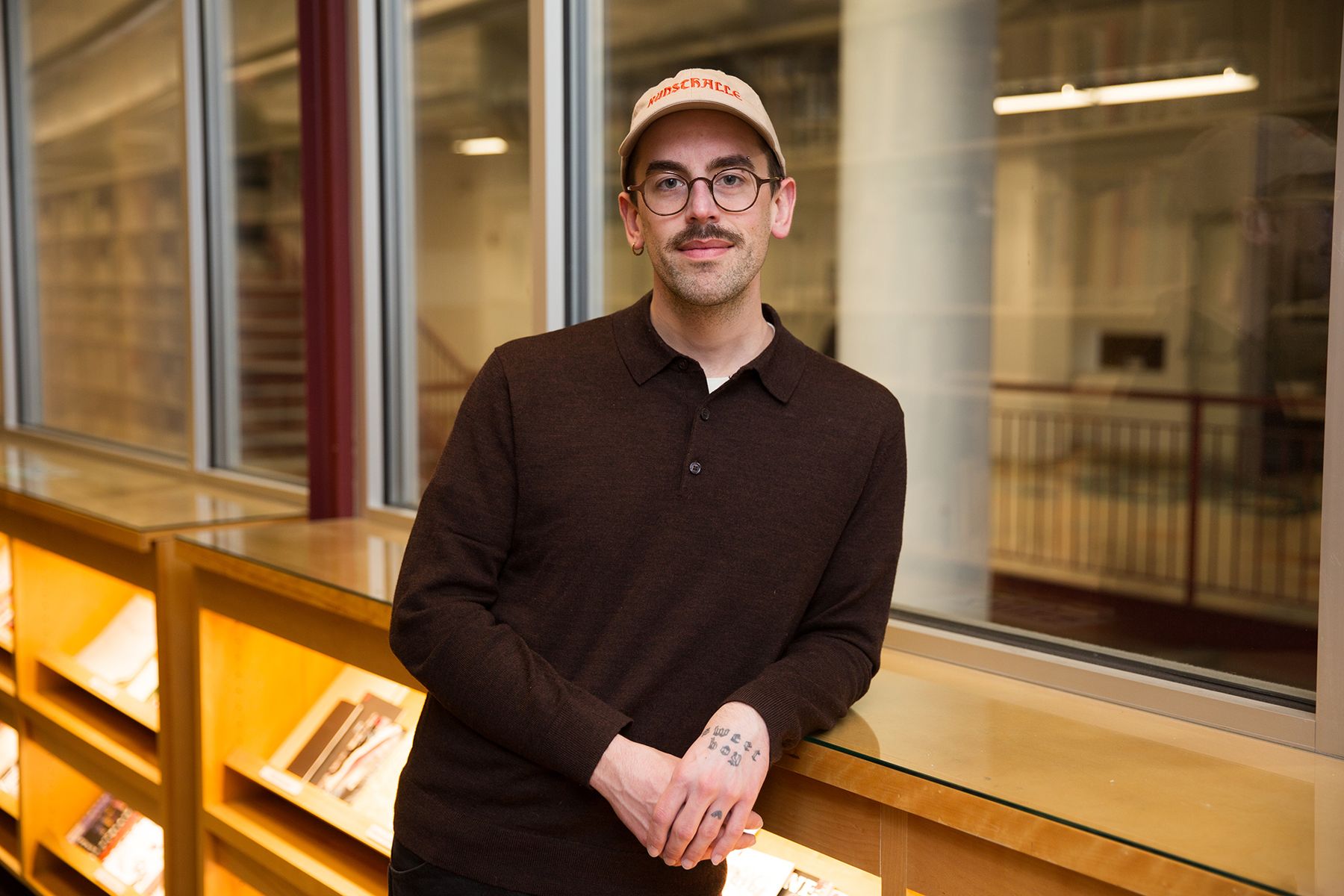
Brian Smith, a 2020 graduate of the MFA program at Maine College of Art & Design, shares his experience with materials, developing his work, and the closely-knit Maine arts community.
What brought you to MECA&D as an MFA student?
When I lived in New York for a few years after my undergraduate studies, I was making art in my bedroom. I knew I was committed to making art, but I felt incredibly blocked. I had artist’s block, I had material block, and I felt kind of locked into the work that I was making. I knew it was time to focus deeply on a graduate program and my work.
I knew Portland to be this cool New England town in Maine, and I didn’t know there was an art school there. And then I applied to the MFA program at MECA&D and got in, did the tour, and fell in love.
When you got here, what was it like to work with your MFA cohort?
It was very exciting! It’s a group of people who come from all different backgrounds and have all different skillsets, and it was very different from my undergraduate, in which I was in a sculpture-focused department. And so an interdisciplinary program was really appealing to me because I could learn from so many people.
I love all materials, almost to a fault. So it’s really great to spend all that time with folks who focus on other elements, to hear their perspectives, and to offer my own.
What were some of those materials that you explored during your time here?
Well, in my undergraduate years, I focused a lot on woodworking. I came to like rudimentary woodworking, two-by-four style, and I added a lot of mixed materials in there as well. When I came to MECA&D, I was anticipating doing a lot of that.
I stuck largely to sculpture,then I ended up working in film for one summer. I did some painting, and then moved into working with invasive plants and paper pulp. I moved on to some plaster—really, just across the board, I love materials.

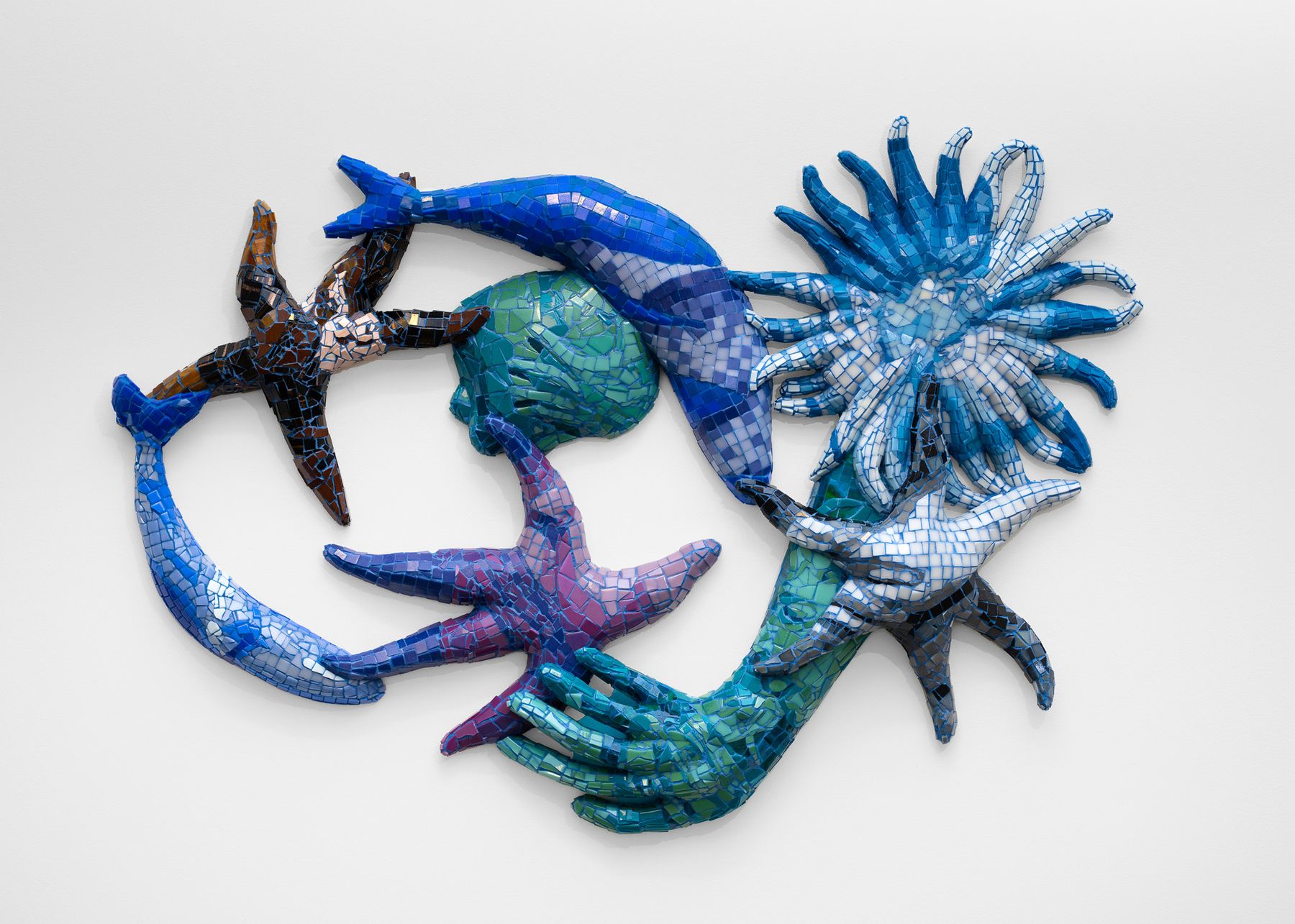
Brian Smith MFA '20. The Deep Sea is a Dark Room. Wood, steel, epoxy, glass, grout. 42”W x 30”H x 4”D. 2025. Photo by Joel Tsui '16, Salt '17, MFA '19.
What faculty members or spaces were especially impactful for you while you were at MECA&D?
I mean, the faculty members are such a huge part of why I loved my experience at MECA&D. Someone who immediately came to mind is Chris Stiegler. We did a survey of art history in our first summer, and that was really impactful because he focused on some of the classics from undergrad, but he also brought in a lot of queer people and those who may not have been covered in my undergraduate art history surveys. He really brought that understanding and timeline to me and introduced me to many new artists.
As for spaces, I have a deep love for the Sculpture department’s woodworking shop. It’s like equal parts industrial and homey and charming, and it has the best view in Portland. I had the pleasure of being the Sculpture Technician for a bit, and I taught as an Adjunct Faculty alongside that department in the Foundations Department.
I can’t remember the room number, but there’s a corner classroom that’s across from the Ceramics department by Sculpture. My first summer, because BFA students aren’t in session, we had more space to spread out, and I used that space as an unofficial studio. It was just such a dream to be in that sun-filled room. And again, the views of Portland are just incredible.
What did you learn during your time at MECA&D that still sticks with you today?
A few things come to mind when I think about lessons I took away from my time at MECA&D, and one of them is the unofficial slogan of the MFA program: "Keep it weird."
In the summer, when both low- and full-residency cohorts come together, you know, it’s called a summer intensive for a reason. It’s very round-the-clock, to the point where keeping it weird is just highly encouraged. It kind of happens naturally when we’re all working really hard. I like to think about that while I’m in the studio.
My instructor, Gail Spaien, always told me that I should make multiples of the pieces I’m working on and to work iteratively. It took me years out of the MFA program to start doing that, but now I definitely keep that in the back of my mind. There’s a lot of growth that happens from making it again in a different but similar way. To learn from that experience has just been incredible.
You mentioned meeting together with the low- and full-residency cohorts in the summer. What was it like to all work together during that time?
It’s really such a cool program. I was happy to be in the full-residency program, but I loved seeing how MECA&D worked to find mentors for the low-res students. And when we came together in the summer, it just felt really natural.
We were all peers, but we got to know each other first through our art. The way the program starts off, all together in the summer, is just such a good foundation for this connection that we built. Throughout the year, we’d communicate with folks across the country. We had this foundation of having met in the summer and knowing we’d meet again the following summer.
Now, it’s also awesome because there are a few of us who are still in the Portland area, but we also have all of these colleagues and friends who are based everywhere, and I think that’s really such an asset from the program.
You’re still based in the Portland area. What has been special about Portland as it relates to you and your art?
I moved to Portland from New York, and I had been there for a few years, and I loved it, but Portland has everything I could hope for in a city. It’s like, good food, good art, great people, and proximity to the ocean. I mean, it’s pretty spectacular. But I think what really drew me in when I moved here was the arts community and how accessible it is to get involved.
It’s a large but small community, if that makes sense. Tons and tons of artists, and we’re all going to the same things. That’s been a really awesome experience. I feel like, being here as an early career artist, I got to interface with people that I could only dream of. We’ve got a lot of heavy hitters here. And it turns out they’re friendly.
Since you finished your MFA in 2020, what have you been up to? What are some highlights from the last six years?
I wanted to dive right into studio work as soon as possible. When I graduated in 2020, we were still very much in lockdown. So I was doing a lot of art from home, and eventually got a studio space, so I dove into being in the studio as much as possible. I was really worried that I would feel burnt out after being in school, like I did after undergrad.
But coming out of the MFA program, I wanted to immediately jump back into my projects, which debunked my burnout fear. I’m a workhorse in my studio. I love to be there. I try to be there at least five days a week, but sometimes it’s more like seven.
Even though I didn’t like all of the work that I made during that time fresh out of school, I’m still proud of a lot of it. It allowed me to experiment with all these different ways of making, and I feel like I’ve settled into a niche that I’m excited to pursue. I’ve been working in the studio quite a bit, and I’ve had a series of group shows in Maine and New England. Being in a group show at the Portland Museum of Art was a milestone in my career so far. It included two acquisitions, which was just amazing. And I’ve had two solo shows, and a third that’s coming up in Boston.
I really do credit that chaotic time coming out of the program with helping me slowly find my niche, my direction.
What’s it like to see your work shown alongside others’?
I love group shows for so many reasons. I think one of the cool things is seeing the works in conversation with each other. At the PMA, my work was in a section of the exhibition with James Parker Foley’s, who also graduated from the MFA program with me, in the same year. We’re best friends.
It was a really cool experience to notice and highlight the tethers between our works. That was amazing, and the show at the PMA was so spectacular because I knew everybody in it. That’s just a real testament to the type of community that’s here in Maine.
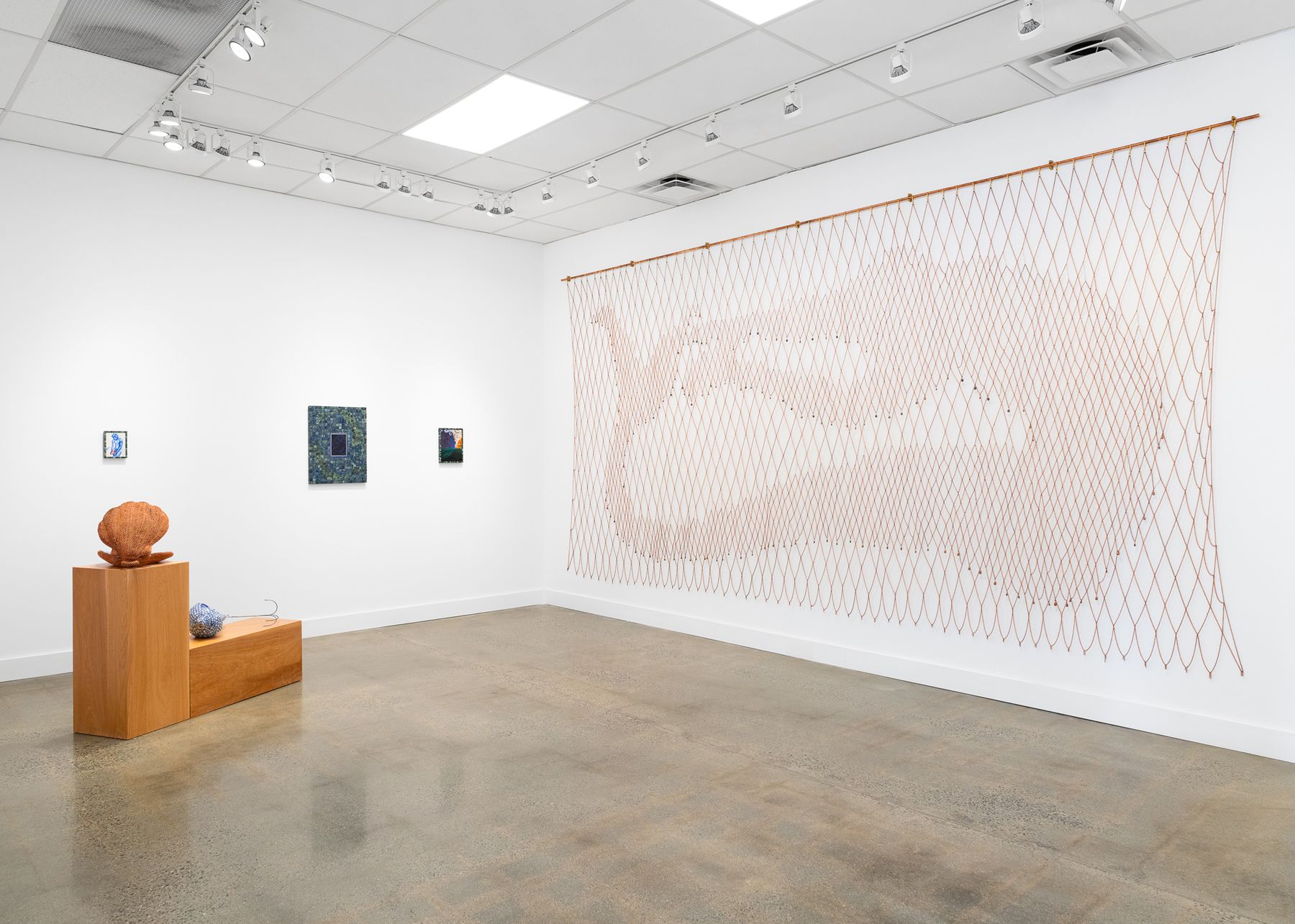
Brian Smith MFA '20. Seen Him Before (install view). Copper plated chain, copper tube, brass hardware. 18’W x 8’H x 1”D. Photo by Joel Tsui '16, Salt '17, MFA '19.
A lot of your work touches on themes of queerness and ecology. How have these themes evolved or matured over time?
I started working with queer ecology broadly as a theme in the last year of the MFA program. I realized that I had been drawn to making work about nature and relationships to it, and that all of the works had a queer lens to them. When I learned about queer ecology, its themes exploded my mind in a really cool way. Queer ecology is the combination of queer theory and eco theory, and allowing a queer perspective to influence how we interact with the world.
I was working pretty broadly with that theme of queer ecology for two or three years, and then I got an opportunity to show work up at the Parsonage Gallery up in Searsport for my first solo show. It was the first time that I was able to see a body of my own work that I had spent time developing all in conversation with each other.
The gallery was near the ocean, and I started thinking about… well, I’m always thinking about the climate catastrophe, but I was thinking about how we might survive climate catastrophe, thinking about campiness and mythology, and envisioning a future where we live underwater as merpeople. It acknowledges the perils of the climate catastrophe but offers hope, which I was really yearning for when I was feeling depressed and anxious about ecology.
Do you feel like your presence in Portland and along the coast helped influence that speculative underwater world?
Yeah, I definitely feel like my presence here has informed that shift into thinking about this underwater world. When I first moved here, I was like, don’t make work about the ocean. Don’t make work about the ocean. But it’s right there. So, of course I will.
I was worried that if I lived along the ocean and made work about the ocean, I might appear cliché. But I think that the work I’m making now has this fun balance, just a hair away from tackiness. Lovingly! I have this visual language with the work that I like to do. I love colors. I love textures.
But I questioned why I felt this way about the tackiness. Currently, I’ve been interested in bas-relief sculptures, and I’ve had such an aversion to them for so long but I was trying to question why that might be. I think it felt antiquated, but it’s such a powerful way of doing 3D and 2D mixed together. I’ve been loving exploring frontal sculpture as a means of storytelling.
What are your hopes for the future of your practice, materials, collaborations, anything?
I’m really excited to just continue being in the studio and expand my audience. I have an upcoming show in Boston, and it’s been a huge goal of mine to have a show outside of Maine because I have a good presence here and I love it, but I’m excited to reach other people who haven’t seen the work.
The top of my goals list would have to be some kind of interaction with the ICA Boston, either showing my work or collecting a piece. When I went to undergrad, I spent a lot of time there, and so because of that, it’s been a huge goal of mine.
I’m really excited about the idea of collaborating with other artists, and I want to keep those conversations going. I hope that as my practice continues to evolve, I can start to afford materials that align better with my interest in ecology. A lot of the time, I’m using plastic beads, or the forms are made of foam, and that’s a direct contradiction to what I’m interested in with ecology. Currently with my beaded nets, I’m starting to create works that are closer to all glass beads, or stone beads, which I think feels better than plastic. I’m excited to continue developing that.