
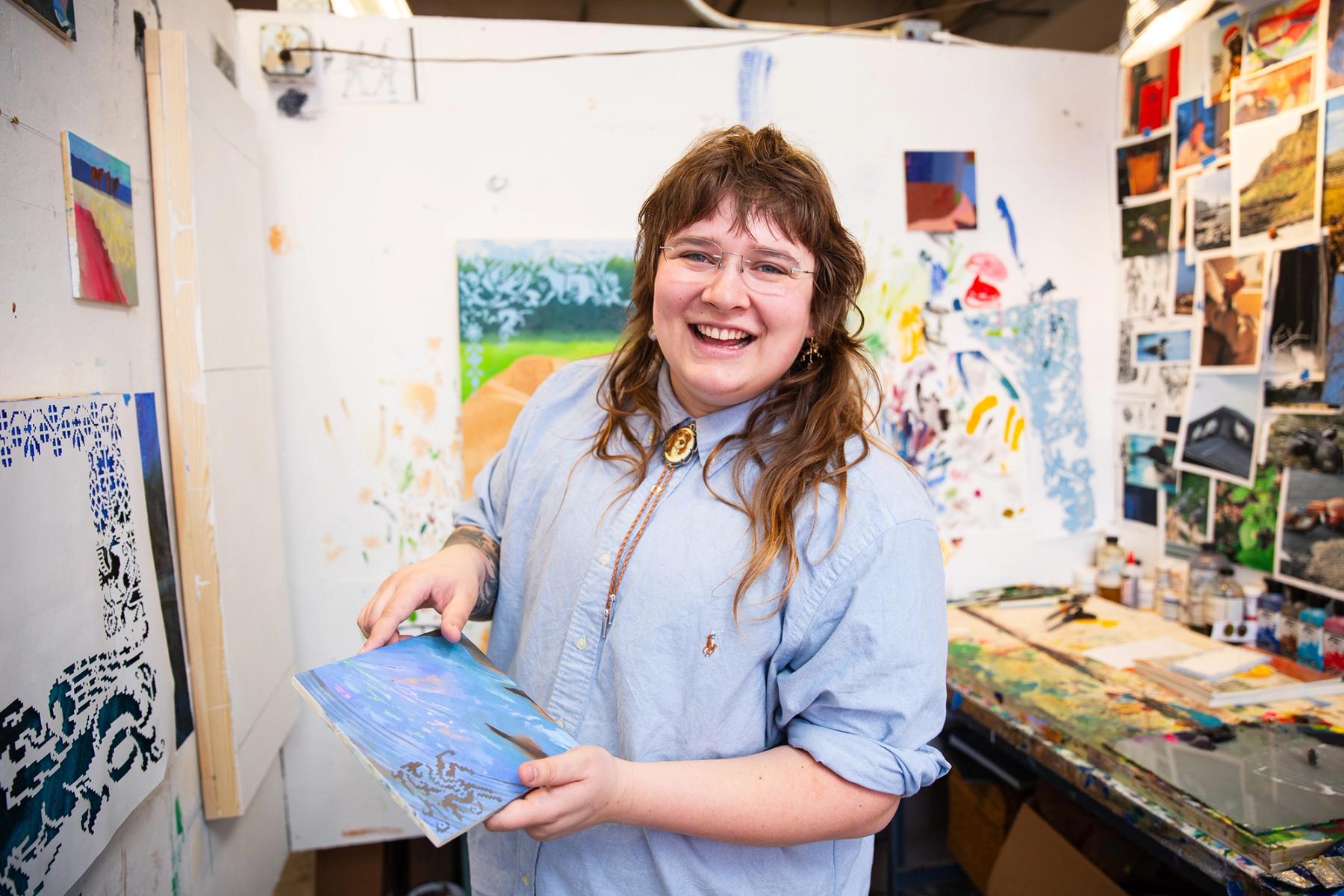
Bets Ondrey ’26 is a painter, transfer student, and recent graduate of Maine College of Art & Design. We sat down with Bets just days before graduation to learn about their time at MECA&D and their hopes for the future. You can see their work featured in a group show at 49 Oak, open now!
What brought you to MECA&D?
I grew up coming to Portland often, and I would walk by MECA&D every time just to see if I could get a glimpse of the environment there. Even before I knew I was going to art school, it was always a thrill to walk past MECA&D.
I spent two years abroad, hiked the Appalachian Trail, and felt kind of lost. I always had MECA&D at the back of my mind. It was the first college that I’d gotten into when applying to college, and it was this grand moment of like, oh my god, I’m going to go to art school no matter what. And I felt like returning to MECA&D after going to a few different schools felt a little bit like coming home.
What about it felt like coming home?
I think the geographic location of MECA&D in Portland, a city I know, feels very homey to me. I think that there’s something about the atmosphere that’s cultivated in Portland around MECA&D that really drew me in. I wanted to know more and be a part of it. I feel like MEC&D is the heart of the Portland arts scene, and everything builds out from there: to DJs and shows and singing and gallery openings. I feel like First Friday is built around MECA&D. It feels like it branches out directly from the front doors.
How do you think your background as a transfer student impacted your experience at MECA&D?
Coming here was pretty jarring because I was a junior, and I felt like I got dropped into a whole new environment that I wasn’t familiar with. But on the first day of painting majors, I entered the building, and I was immediately greeted by so many people, and I felt so confused because it was just this immediate welcoming energy. I felt like I got enveloped right into the fold, into the family that is the painting department. Honour Mack and Philip Brou immediately introduced themselves to me and showed me around the studios.
That day, we were doing the lottery for studio spaces. When I got my number, I just picked the one with the nicest lighting, and I ended up with the studio across from this nice girl who helped me figure out my schedule. She ended up being the same friend that I’ve had for the rest of my time here. We still have our studios next to each other. We picked them specifically.
The environment of the studio spaces was such a big deal for me because the studios were open in the other schools I’d come from. It felt very separate, even though there were no walls. I feel like MECA&D’s environment, with the walls and closed studios and curtains, really promotes a kind of autonomy. You can close your curtain if you want to focus on your work or if you want to be alone, but you can also open your curtain as an invitation to your peers. I found that to be the most powerful part of my transfer experience.
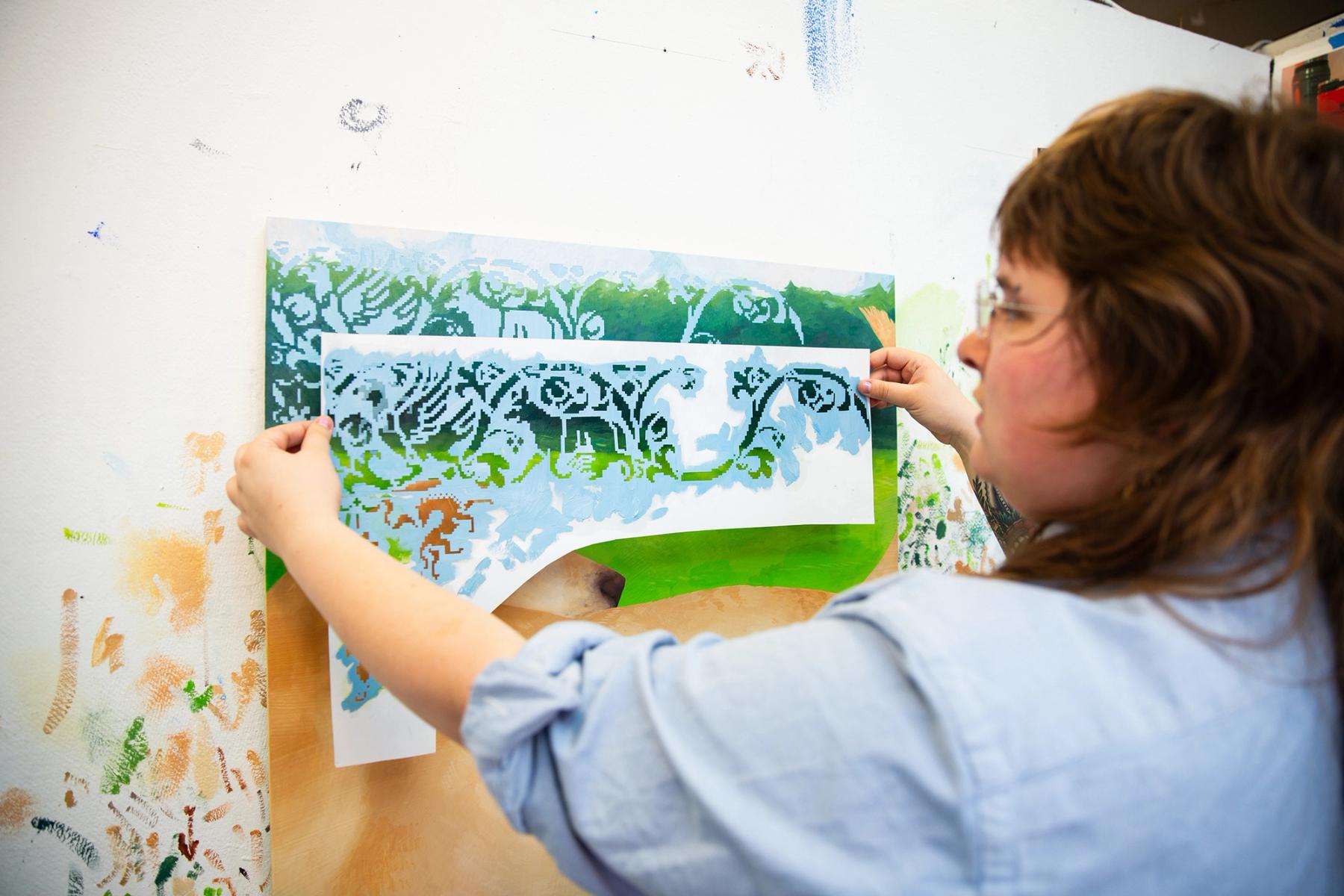
Bets working in their studio. Photo by Natalie Conn, Salt ’07.
What was it like for you to join such a closely-knit community?
It was a little bit frightening to join such a close-knit community because, like, it feels like there are already so many social dynamics established. People have known each other since freshman year, or Pre-College. It felt daunting to enter the community, but it was so easy, especially with the BFA Show in the fall. Everyone was putting up their work and helping each other install, and I remember that I was setting up, and I didn’t know that many people yet, and people were just walking past me and talking to me about my install and giving me tips and letting me borrow levels and screwdrivers and nails, and it was just the most endearing experience of being new in a community.
Now, as I walk through the halls and I see people’s installs, I kind of learn a little bit about them. And there are times when I will stop and offer my help or my assistance. It’s a full-circle moment. Just yesterday, I helped someone who was struggling to create an installation with some dynamic motion. We kind of worked together to get up the ladder and turn things around. And I didn’t even really know this person, but I didn’t even think twice about helping them. It was just like, oh, I’m just gonna help with install because that’s who we are at this school. The students here are always out to help each other.
Looking back on your time at MECA&D, what has made it special to you?
MECA&D has been special to me in the way that it prepares you to leave, which feels kind of sad. But genuinely, the school does everything in its power to set you up so that when you walk out the doors for the last time, you can enter directly into the art world. And I feel like that’s a miraculous feat that I haven’t seen from my other schools.
Artists at Work sends so many emails and sets up so many opportunities, and professors are constantly calling artists to visit our critiques and set up studio visits and artist talks. MECA&D makes it kind of impossible not to take advantage of all of these opportunities to talk to artists who are creating work out in the world. I feel like that’s the most special part of all of it.
What opportunities did you take advantage of while you were a student?
Last year, when I was a junior, Honour Mack and Philip Brou had asked artists to come to final critiques as guest critics. I’d heard that they were going to invite one of my favorite artists whose work I saw in Rockland, Maine. I immediately freaked out, and I begged to go during her critique day. I got to meet her, got a studio visit with her, and got feedback from her. I just remember that that opportunity felt so huge, and I’m hoping that I can build on that connection when I graduate. I actually have a studio visit with her this month! So I feel like meeting one of my favorite local artists was something that I really took advantage of.
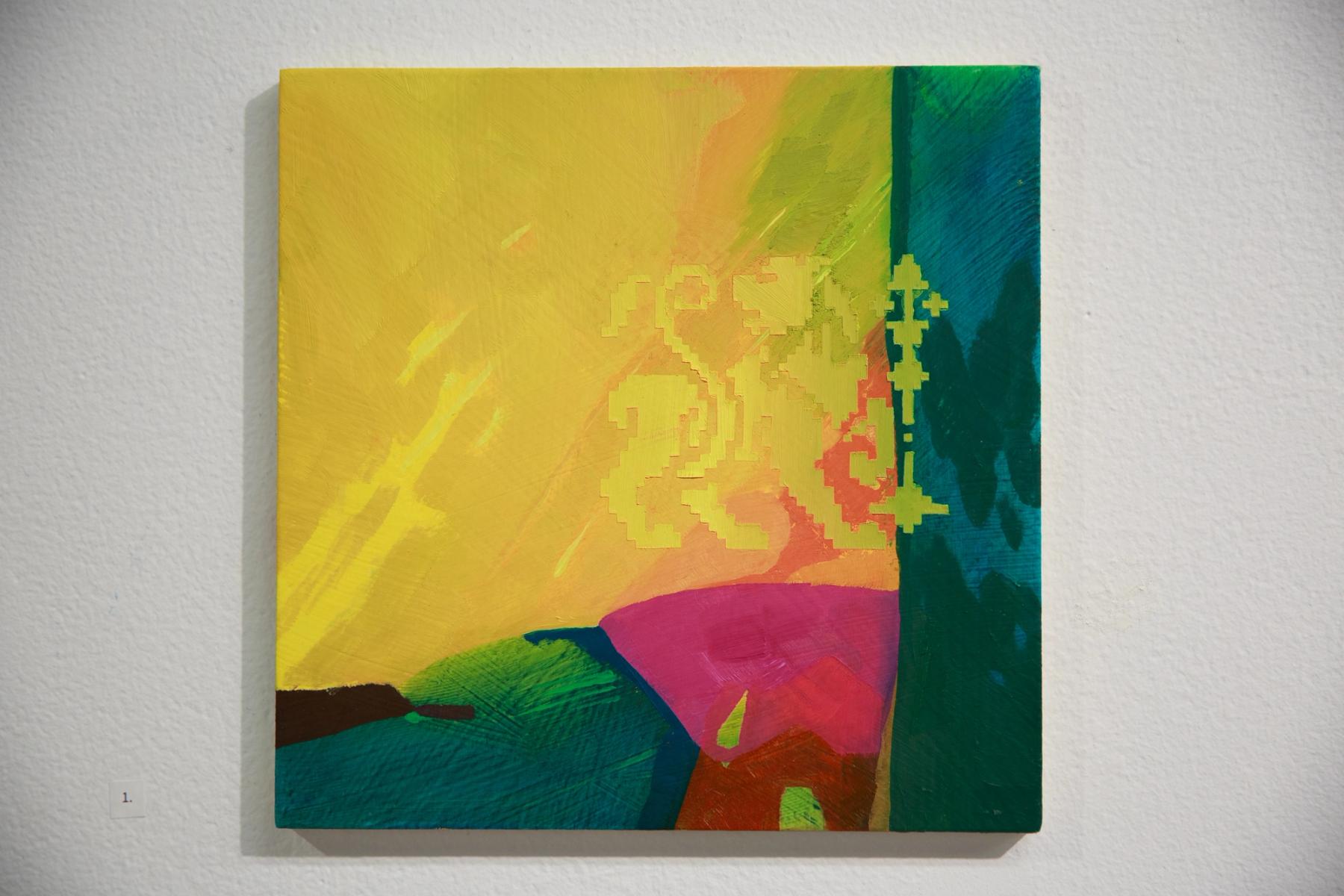
Blaze. Oil on panel, 8 x 8 in, 2026. Included in Bets Ondrey’s ‘26 thesis project. Photo by Natalie Conn, Salt ’07.
Have there been any classes or instructors that have been especially memorable to you?
Deb Debiegun and Pedro Daher are two academic professors who totally changed my art school experience. Deb teaches science and a lot of natural classes where we get to leave the studio and go out into the world, to the ocean, to the salt marshes, into the forest. It’s such a gift when you’re in the studio for hours creating work. It’s sometimes hard to find time to go outside, and so taking a science class really pushed me to go outside into the beautiful weather.
There’s Pedro’s creative writing class, too. Pedro is probably the most fantastic professor I’ve ever had. I found that he really shaped the way I thought about my art because we talked about a lot of different artists, writers, and people in history in that class, and it felt really informative. It helps to format the research you should be doing about your own work so it stands stronger. It’s so thrilling to have such fantastic academic classes at an art school. It feels like such a privilege and a gift, but it’s just a common currency at MECA&D.
How has your creative practice changed over the past two years at MECA&D?
My idea of painting used to be like, grandiose works that take up the entire studio wall and require a full bucket of gesso. At MECA&D, I feel like I calibrated and condensed my process in a way that allowed for separate rich moments to come through. I feel like, in the past, I’d be working on one big thing for months and months, and that would be my one painting. But here, I feel like I’ve learned that I don’t just have to do one painting. The next one can be beautiful, too. I’m going to do one painting, and it’ll be luscious and thrilling, but the next one will be, too, and I can move on from that and create a larger body of work that doesn’t have to be one enormous, large-scale painting.
What’s one of the most important things you’ve learned during your time here?
The most important thing that I’ve learned at MECA&D is that cultivating community, specifically an artist community, is essential to my success and my contentment. It feels really right to come in to create, give feedback, connect, build each other up, and work together. It feels really special.
What does creative community mean to you?
To me, creative community means creating work that local people can enjoy and celebrate. Shows at 49 Oak, thesis shows, and shows at the PMA and the ICA… I just feel like we’re creating an environment where people can come and celebrate art and inspire, learn new perspectives, and just enrich their minds. I feel like art is so important, especially now. Creating beautiful things within the city draws people in and holds them there, and I think that’s really cool that we get to do that all the time.